Tooth Sensitivity to Cold or Hot: Reasons and Best Treatments
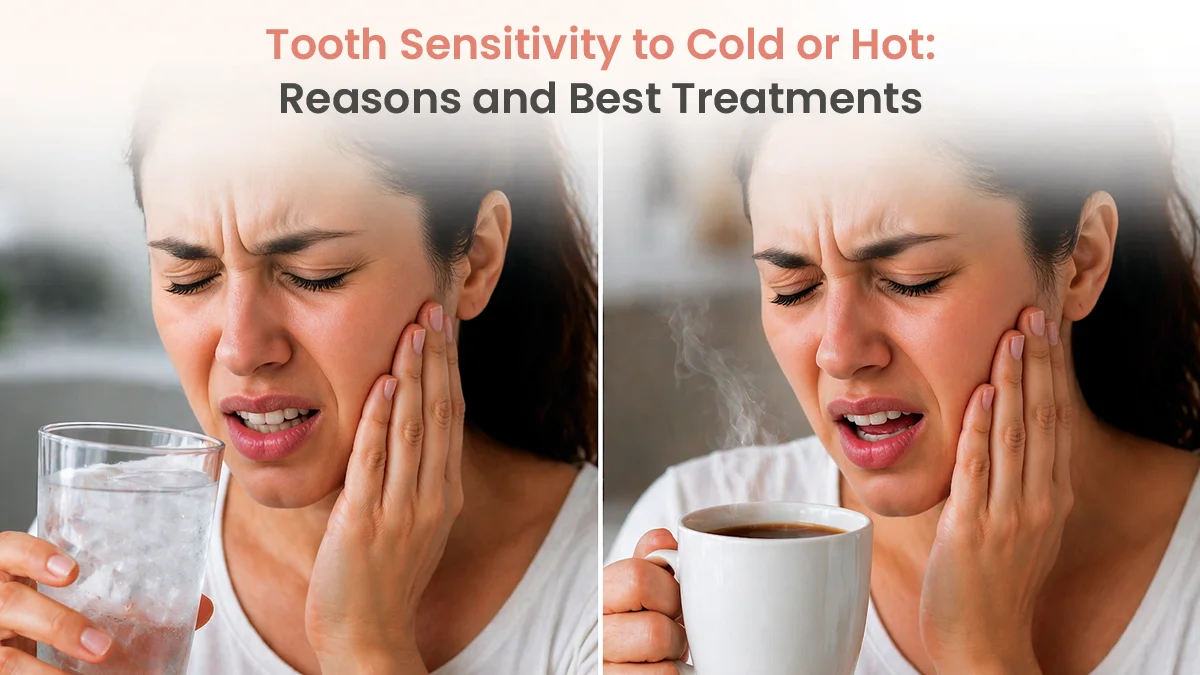
Most people treat tooth sensitivity the way they treat a slow puncture. They notice it, they acknowledge it, and then they carry on until the wheel falls off. A wince over a cold drink, a sharp intake of breath with hot tea, and then the moment passes and nothing gets done. By now you should know that this is exactly how a straightforward, inexpensive fix becomes a complicated, costly one. An oral hygiene consultation in Prabhadevi can help you identify these issues before they escalate into significant dental problems.
The causes of sensitivity of teeth almost always trace back to one structural reality: the protective enamel has been compromised, or the gum tissue has pulled back, leaving the dentin exposed. Dentin is riddled with microscopic tubules that run directly to the nerve. Hot food, cold drinks, even cold air – basically anything that reaches those tubules travels that entire distance.
That is the pain you feel. And the enamel is not regenerating on its own. Time, in this context, is not your friend.
Sensitive teeth bothering you? Find the right treatment.
A] What Causes Tooth Sensitivity? (Understanding the Root Problem)
So, what is actually happening inside the tooth?
Enamel is the hardest substance in the human body, but repeated acid exposure, aggressive brushing, and grinding will wear it down reliably over time. Once it is gone, the dentin beneath it has no buffer between the nerve and whatever temperature stimulus you throw at it. Think of it this way: the dentinal tubules are open channels running straight to the nerve centre of the tooth, and every hot or cold trigger travels that entire route unimpeded. Sharp, brief, and unmistakable.
The cause of tooth sensitivity to hot and cold is not a single event; it is a category. Factors such as enamel erosion, gum recession, active decay, and cracked teeth can expose dentin differently, at different rates and in different locations. Identifying which one is actually driving your sensitivity is what determines whether treatment works or merely delays the inevitable. Get that diagnosis right, and everything else follows.
B] Common Reasons for Sensitivity to Hot or Cold
1. Enamel Erosion: The Dietary Factor
Enamel erosion is the most common driver, and it is largely dietary and behavioural. Acidic foods and drinks such as citrus, fizzy beverages, and wine, among others, gradually strip the enamel surface, and aggressive brushing accelerates the damage significantly.
Around 45% of adults show signs of enamel erosion. This just headlines the fact that most people are unknowingly trading long-term tooth structure for short-term habits.
2. Gum Recession: Exposed Roots
Gum recession is the second major culprit and, in some ways, the more serious one. When the gum tissue pulls back, it exposes the root surface, which has zero enamel protection and is therefore far more reactive to temperature, pressure, and sweet stimuli. This is also why your teeth being sensitive to cold and hot is not always a uniform sensation across the mouth; recession tends to affect specific teeth, and the sensitivity follows that pattern precisely.
3. Mechanical Damage and Decay
Again, do not overlook the mechanical causes. Tooth decay creates direct pathways to the nerve where cavity-related sensitivity is sharper and more localised than generalised enamel wear. Cracked or chipped teeth work the same way; even a hairline fracture is enough to let temperature penetrate the inner layers.
4. Bruxism and Failing Restorations
Bruxism (read: grinding that most patients are completely unaware of) wears enamel down session after session until the damage is structural. And worn restorations that no longer cover the tooth structure they were placed to protect can create literal and functional gaps.
C] Best Treatments for Tooth Sensitivity: Match the Fix to the Cause
1. At-Home Management: Limits and Efficacy
Is at-home management worth anything? Yes, but within strict limits. Desensitising toothpaste containing potassium nitrate or stannous fluoride progressively blocks the dentinal tubules with consistent use over several weeks. Pair it with a soft-bristled brush, gentle circular technique, and a meaningful reduction in acidic intake, and you can manage mild, diffuse sensitivity reasonably well.
When Home Care Isn't Enough
But be clear about what it cannot do. It will not fix a cavity, reverse recession, or address a crack. Look to it as a first-line response to early, minor sensitivity and nothing more.
2. Professional In-Chair Interventions
How dentists treat sensitive teeth is a different order of intervention entirely.
- Fluoride Varnish: In-chair fluoride varnish delivers a concentrated dose directly to the exposed surface, strengthening enamel far more effectively than anything over the counter.
- Dental bonding: Covers exposed dentin or root surfaces with tooth-coloured resin, which is a physical barrier that no dietary adjustment can replicate.
- Surgical Solutions: Where recession is significant, a gum graft is often the only durable solution.
3. Addressing Structural Damage
Cavities get filled; there is no workaround. And where the nerve itself has been compromised, root canal treatment is well-established as an effective treatment procedure.
How to reduce tooth sensitivity in any lasting way means matching the treatment to the diagnosis. Reaching for desensitising toothpaste when you have active decay is not management. It is delaying treatment.
D] When Should You See a Dentist?
1. Red Flags: Listening to Your Teeth
Sensitivity that clears up within a day or two is one thing. Sensitivity that persists beyond a few days, worsens progressively, or is confined to a single tooth is telling you something specific, which you should listen to.
2. Specific Triggers and Emergency Signals
Single-tooth sensitivity, particularly when heat is the stronger trigger rather than cold, can indicate nerve inflammation or an early abscess. Neither resolves without intervention. Visible swelling, bleeding gums, or physical damage to the tooth structure are not ambiguous signals. They are overdue ones.
3. The Cost of Delay
It is high time that the instinct to "keep an eye on it" gets replaced with an actual appointment. The best cure for sensitive teeth is an accurate diagnosis, while everything else should be considered secondary.
Whether you’re dealing with early-stage enamel wear, a small cavity, or minor recession, they can be resolved with fast, low-cost interventions. Leave them unaddressed and they escalate into procedures that are more complex, more time-consuming, and significantly more expensive.
There is no reason not to act early. The numbers simply do not favour waiting.
E] How to Prevent Tooth Sensitivity
1. Refined Brushing Habits
Brush twice daily with a soft-bristled brush using gentle circular strokes. Avoid an aggressive back-and-forth technique that strips enamel as efficiently as anything acidic.
2. Dietary Timing
Limit acidic food and drink intake, and when you do consume them, rinse with water first and wait before brushing. This is due to the fact that enamel is temporarily softened by acid and more vulnerable to abrasion in that window.
3. Structural Protection and Maintenance
- Night Guards: If bruxism is in the picture, get a custom night guard fitted. Look to it as essential protection, not an optional extra, as it is the only reliable barrier between grinding and progressive enamel loss.
- Routine Check-ups: Schedule a check-up every six months so that early wear, recession, or decay gets caught before it becomes a sensitive teeth cause and treatment conversation rather than routine maintenance.
Fix tooth sensitivity before it worsens.
Conclusion
Here is the concrete reality of what untreated sensitivity costs. Every month of unaddressed enamel erosion, undiagnosed decay, or progressive recession narrows your treatment options and deepens the intervention required. What starts as a desensitising toothpaste conversation becomes a bonding procedure. What starts as a minor recession becomes a graft. What starts as a small cavity becomes a root canal. Identify the cause, match it to the right treatment, and act early because the alternative is not just discomfort. It is a materially higher treatment cost, longer chair time, and a longer recovery. Visit our leading dental clinic in Prabhadevi for personalised specialist care, honest clinical breakdowns, and a comfortable, state-of-the-art setting that puts you completely at ease.