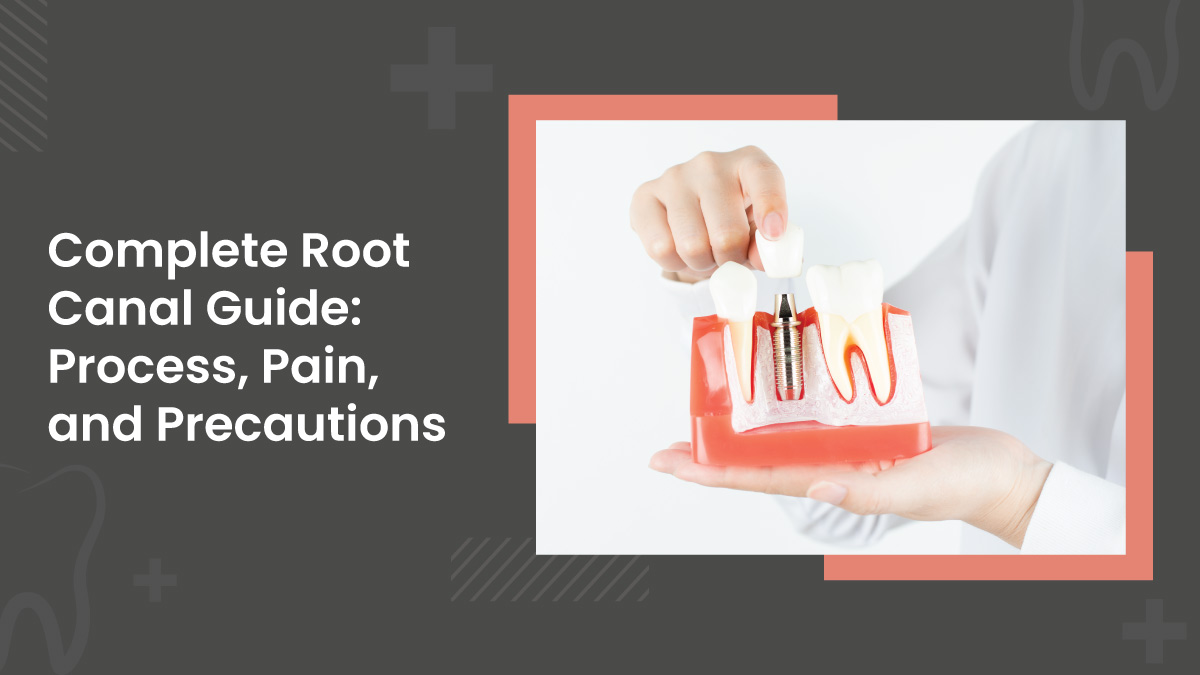
Complete Root Canal Guide: Process, Pain, and Precautions
If you’ve been told you might need a root canal, your first reaction is probably worry. This treatment addresses infection inside the tooth and helps you avoid losing it altogether. In this root canal guide, you’ll learn what the procedure involves, how painful it really is, the signs that point to needing one, the treatment steps, and the precautions that keep recovery smooth.
A] Understanding Root Canal Treatment
A root canal is a dental procedure that treats infection or damage inside the tooth. Every tooth has a soft center called the pulp, which holds nerves and blood vessels. When bacteria reach this area, through deep cavities, cracks, or injury, the pulp becomes infected. That’s what leads to intense toothache and swelling.
>The process of root canal treatment removes the diseased pulp, cleans the canals inside the tooth, and seals them so infection does not return. By doing this, the natural tooth stays in place, chewing function is restored, and you avoid more serious complications. An infected tooth root canal is often the only way to save the tooth once the pulp is affected.
B] Is Root Canal Painful?
You may wonder, is a root canal painful? The simple answer is no, not during the procedure. Your dentist uses local anaesthesia to numb the area so you don’t feel sharp pain. At most, you’ll notice pressure or vibration while the dentist works. After the anaesthesia wears off, you may feel mild soreness for a few days. This is temporary and can be managed with common pain relievers.
C] Signs You Might Need a Root Canal
Certain symptoms indicate that a root canal might be necessary. You should consider seeing a dentist in Prabhadevi or your local area if you notice any of these signs:
- Toothache that doesn’t go away and worsens when biting.
- Sensitivity to hot or cold foods that lingers even after the source is removed.
- Gums that are swollen or tender near a particular tooth.
- Darkening of a tooth, which may signal damage to the nerve.
If you recognize these issues, your dentist may confirm whether a root canal is required to save the tooth.
D] Root Canal Procedure Step-by-Step
Understanding the root canal procedure step by step helps you know exactly what to expect. Here’s how root canal is done in most dental clinics:
Step 1: Examination and X-rays
Your dentist begins by examining the tooth and taking X-rays. This helps reveal how far the infection has spread and gives a clear view of the tooth’s root structure.
Step 2: Local Anesthesia
Once the treatment plan is clear, anesthesia is applied to numb the area. This ensures you stay comfortable throughout the procedure.
Step 3: Opening the Tooth and Removing the Infected Pulp
A small opening is created on the surface of the tooth. Through this access, the infected pulp tissue is carefully removed. This is the stage where pain caused by infection is eliminated.
Step 4: Shaping the Canals
After cleaning, the canals inside the tooth are shaped with fine instruments. This makes sure they are ready to be filled and sealed properly.
Step 5: Filling and Sealing the Canals
The cleaned canals are filled with a safe material called gutta-percha. This material seals off the canals and prevents bacteria from returning.
Step 6: Placement of a Crown or Filling
The tooth is then restored with either a filling or, more commonly, a crown. A crown provides strength
and protection, especially since the treated tooth may become weaker without it.
If you’re asking how many sitting for root canal treatment is needed, it usually takes one or two
appointments. For complex cases, your dentist may recommend additional visits.
E] Before and After Root Canal Treatment
Comparing root canal before and after shows the importance of timely care. Before treatment, you may
struggle with severe pain, swelling, and the risk of losing the tooth. After treatment, the pain is gone,
chewing feels normal again, and the tooth is preserved.
What happens after root canal treatment is a return to comfort and function. Instead of extraction and
replacement, you keep your natural tooth in place, which is always the better long-term choice.
F] Precautions After Root Canal Treatment
Taking the right steps after treatment helps ensure recovery is smooth. Here are important precautions after root canal treatment:
- Avoid chewing hard or sticky foods on the treated tooth until your crown is placed.
- Maintain oral hygiene with brushing and flossing as usual.
- Keep follow-up appointments so your dentist can check healing.
- Contact your dentist if you notice unusual swelling, persistent pain, or discomfort.
G] Recovery and Long-Term Care
Recovery from a root canal usually takes just a few days. Mild sensitivity is common, but it doesn’t last long. If you are wondering how to stop throbbing pain after root canal, your dentist may recommend over-the-counter pain medication or rest for a day or two. As for how long root canal last, treated teeth can last a lifetime when cared for properly. Brush and floss daily, visit your dentist for regular checkups, and avoid chewing on very hard foods.
Conclusion
A root canal may sound daunting, but it’s a safe and effective way to save an infected tooth. By knowing the root canal treatment steps, the recovery process, and the right aftercare, you’ll feel more confident about the decision. If you are searching for root canal treatment in Prabhadevi, choosing an experienced dentist ensures you get quality care and lasting results. Get in touch with a dental specialist now.