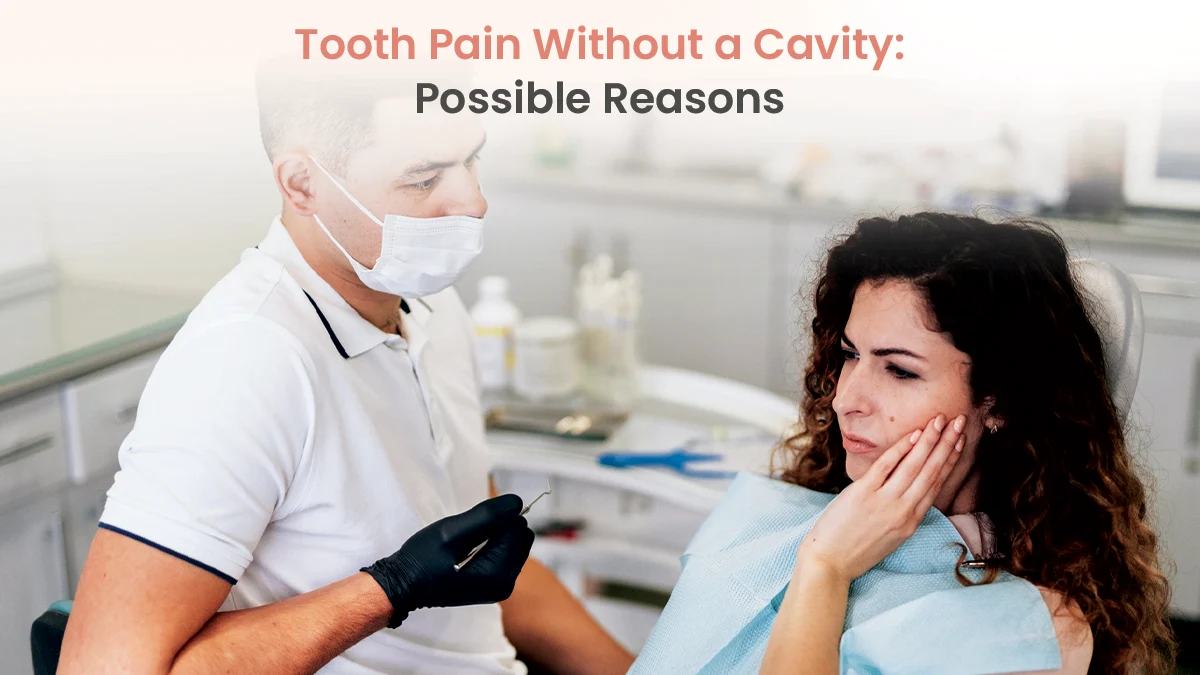
Tooth Pain Without a Cavity: Possible Reasons
If you’re experiencing a persistent toothache right now, you would likely assume that you are dealing with some kind of decay or cavity.
But the reality is there can be a variety of dental or even non-dental scenarios that lead to tooth pain. This includes a situation where you experience tooth pain without a cavity.
Many patients often find this to be extremely confusing and frustrating. The underlying cause of your tooth pain can also be:
- Gum disease
- Teeth grinding (bruxism)
- Sinus infections
- Cracked teeth
If you’re experiencing persistent tooth pain, you should consult your dentists immediately to identify the underlying cause and get started with the right treatment. In such a situation, it is highly advisable to schedule an oral hygiene consultation in Prabhadevi so that our specialists can accurately diagnose the issue before it progressively worsens.
In this guide, we will be covering the most common causes of tooth pain even when there is no visible cavity, the important symptoms you should watch out for, and the right treatment options to consider.
Identify the real cause of your tooth pain with expert care.
A] You Have a Toothache Without a Cavity?
You must be wondering, “Is a toothache with no cavity even normal?”
Yes, it is! In fact, far more common than most people realise.
Cavities are one of the most common causes of tooth pain, but there are other factors that could be causing the pain you’re currently experiencing.
Your tooth is made up of blood vessels, nerves, and supporting tissues. All of these can get inflamed or irritated due to multiple other factors causing you pain. It is also likely that the pain is originating from somewhere else, like the jaw, gums, sinuses, or surrounding teeth. This type of pain is known as “referred pain”, where the source of your pain is one tooth, but your brain interprets it as pain for another tooth.
If your tooth is hurting without any evidence of a cavity for more than a day or two, it is important to get it checked out by your dentist.
B] Common Causes of Tooth Pain Without a Cavity
Once you understand the causes of toothache with no cavity, you can quickly identify if the situation will resolve on its own or whether you’ll need to visit your dentist. Below we have listed some of the more common causes of toothache without a cavity.
1. Tooth Sensitivity
If the protective enamel of any of your teeth wears down or your gums recede, it will expose the dentin beneath, causing you to experience tooth sensitivity. You feel a prickly sensation whenever you consume cold, sweet or acidic foods, as these foods stimulate the nerves inside your tooth.
Common signs of tooth sensitivity that you may experience include:
- Sharp pain when drinking hot or cold beverages
- Temporary discomfort while eating sweets
- Pain that disappears once the trigger is removed
2. Gum Disease
Even a healthy tooth can start to feel painful if the surrounding gum is either inflamed or infected. Prolonged buildup of plaque can lead to severe gum issues such as gingivitis or periodontitis, which can cause you tenderness, swelling, and heightened discomfort around the affected tooth.
You may also notice:
- Bleeding while brushing
- Red or swollen gums
- Persistent bad breath
- Gum recession
By detecting the symptoms early and seeking timely professional intervention, you can prevent further damage to the supporting tissues around the teeth.
3. Cracked Tooth
Quite often if there is a small crack in your tooth, it might not even be visible. However, it can still expose the inner layers of your tooth, which irritate the nerves underneath, causing you to experience tooth sensitivity.
You may experience the following symptoms:
- Pain while chewing
- Sensitivity to hot or cold foods
- Intermittent discomfort that comes and goes
Such cracks are not always visible to the naked eye. So, if you experience any persistent symptoms, rush to your dentist immediately, who may require special imaging or lighting to diagnose the issue.
4. Teeth Grinding or Bruxism
A lot of people clench or grind their teeth while sleeping without even realising it. If this continues, it places excessive pressure on your jaw muscles and teeth.
Common symptoms include:
- Morning tooth pain
- Jaw stiffness
- Headaches after waking
- Worn tooth surfaces
After examination, your dentist might recommend a custom nightguard to address this behaviour, which can help prevent further damage.
5. Dental Abscess
Dental abscesses are commonly caused due to cavities. However, it is important to keep in mind that an abscess can also develop if you have experienced some kind of gum infection or trauma.
Warning signs you should be aware of here include:
- Severe throbbing pain
- Swelling around the tooth
- Pus discharge
- Fever
- Swollen lymph nodes
If you experience any of these symptoms, it is advisable to schedule a professional dental evaluation promptly.
6. Impacted Wisdom Tooth
If you are dealing with a partially erupted or impacted wisdom tooth, it could lead to pain caused due to the added pressure created on neighbouring teeth.
You will find these pain symptoms are often accompanied by:
- Swollen gums
- Difficulty chewing
- Pain at the back of the mouth
- Jaw discomfort
7. Sinus Infection
The roots of the upper back teeth are located close to the sinus cavities. If your sinuses get inflamed, your teeth may experience pain due to the added pressure.
You may also experience:
- Nasal congestion
- Facial pressure
- Headache
- Pain that worsens when bending forward
If you experience no pain once your sinus infection heals, you may not require any further dental treatment.
8. Recent Dental Treatment
If you have recently undergone a dental procedure such as fillings, crowns, or teeth whitening, it is normal to experience mild tooth sensitivity for a few days. However, if your pain does not subside or worsens, you should get it evaluated by your dentist.
C] Why Does My Tooth Hurt If I Have No Cavity?
Quite a few of our patients ask, ”Why does my tooth hurt if I have no cavity?”
As we have explained before, you could still experience tooth pain if the underlying cause is any of the following:
- Exposed tooth roots
- Inflamed gums
- A cracked tooth
- Teeth grinding
- Bite problems
- Wisdom tooth pressure
- Nerve inflammation
- Sinus-related pressure
Some scenarios of early decay can be hard to detect, as it can be hidden between teeth or beneath existing dental restorations. Your dentist will only be able to diagnose it properly with X rays.
D] How Dentists Diagnose the Cause of Tooth Pain Without a Cavity
Since many conditions produce similar symptoms, your dentist may perform any of the following to diagnose your issue:
- A visual examination of the teeth and gums
- Dental X rays
- Bite analysis
- Gum health assessment
- Sensitivity testing
- Gentle tapping of the tooth to identify inflammation
After conducting these examinations your dentist will be able to identify the root cause of your pain and prescribe the most appropriate treatment.
E] Treatment Options For Tooth Pain Without a Cavity
The treatment method recommended by your dentist will be completely governed by the underlying diagnosis.
1. Home Care
While waiting for your dental appointment, you can help reduce discomfort by:
- Rinsing with warm salt water
- Avoiding very hot or cold foods
- Maintaining good oral hygiene
- Eating soft foods
- Avoiding chewing on the painful side
You should keep in mind that while these measures provide some temporary relief, they should not be considered as alternatives to professional care.
2. Professional Treatment
Depending on the diagnosis, your dentist may recommend:
- Professional cleaning for gum disease
- Desensitising treatment for sensitive teeth
- Repair of a cracked tooth
- A custom night guard for teeth grinding
- Adjustment of your bite if necessary
- Treatment for impacted wisdom teeth
Our specialists might recommend root canal treatment in Prabhadevi if they detect that your tooth nerve has been irreversibly inflamed or infected. This will not only help relieve your pain symptoms, but it will also preserve the natural tooth.
F] When Should You See a Dentist Immediately?
If you experience any of the following symptoms, seek urgent dental care:
- Severe or worsening tooth pain
- Swelling of the face or gums
- Fever
- Pus around the tooth
- Difficulty chewing
- Pain lasting more than two days
- A loose tooth
- Difficulty opening your mouth
By identifying your symptoms accurately and getting timely treatment you can prevent further complications and avoid more complex, costly treatments.
Get personalised treatment to relieve tooth pain and protect your smile.
Conclusion
Any kind of persistent tooth pain with or without a cavity should not be ignored.
Identifying the underlying cause early helps prevent complications and ensures you receive the most effective treatment.
If you are experiencing persistent tooth pain, do not rely on self-diagnosis. Visit Enamel Dental Specialities for a comprehensive evaluation, where our experienced team will identify the cause of your discomfort and recommend a personalised treatment plan to restore your oral health.