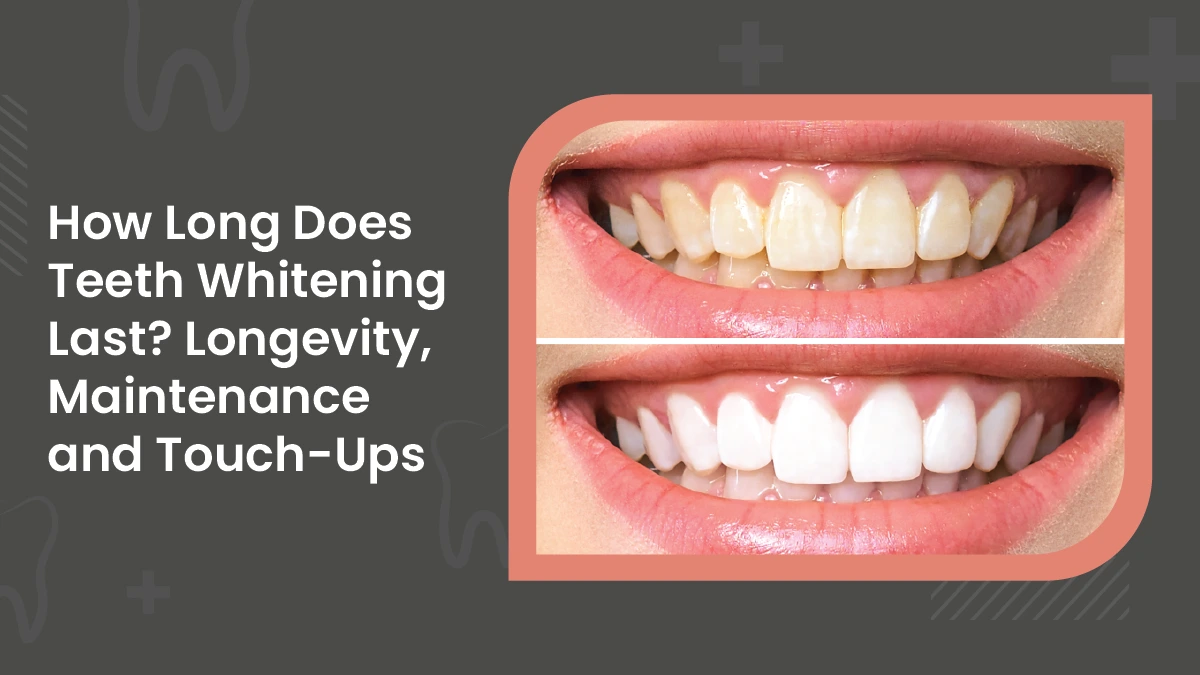
How Long Does Teeth Whitening Last? Longevity, Maintenance and Touch-Ups
Your smile is at the centre of every conversation. If you've started noticing dull or yellow shades, those stains can draw attention faster than you’d like. In such scenarios, professional whitening stands out as one of the most requested cosmetic dental treatments because results show quickly.
It is important to have clear expectations about the process. Whitening can help improve tooth shade, but it does not make them stain-proof. Your food choices, drinks, and oral care habits are also a factor in deciding how long whitening results last. With the right maintenance plan, your brighter smile can last for years, not weeks. Here is what affects the lifespan of teeth whitening results and what you control.
Ready for a brighter, cleaner smile that lasts? Book a professional whitening consultation with our experts today.
A] What Happens During Teeth Whitening
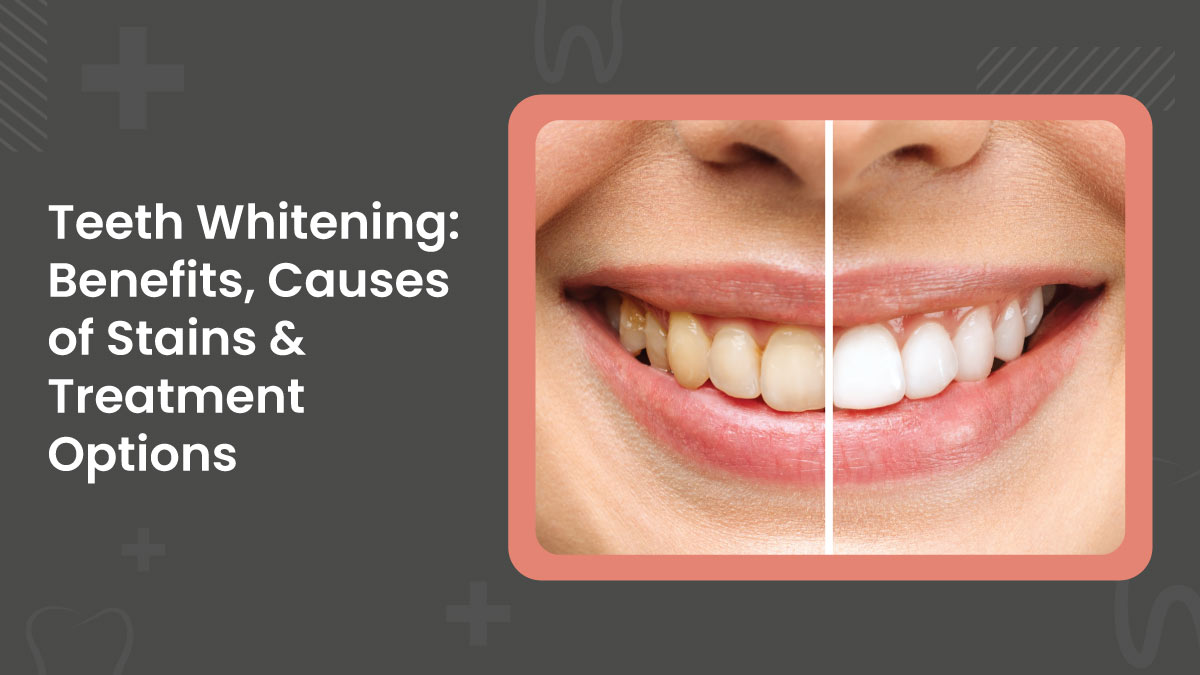
Whitening treatments use bleaching agents to break stain particles inside enamel. These agents penetrate tiny enamel pores and target pigmented compounds left behind by food, drinks, and tobacco. When stain molecules break apart, teeth reflect more light and appear whiter.
Understanding the two types of discolouration:
- Extrinsic Stains: surface-level stains sit on the outer enamel surface and are typically caused by dark liquids like coffee and tea and highly pigmented foods.
- Intrinsic Stains: stains form deeper within enamel and dentin, often caused by ageing, past injuries, and certain medicines.
Teeth contain microscopic pores. After treatment, these pores still absorb colour from daily eating and drinking. This gradual re-staining explains why teeth whitening longevity depends on your habits after the procedure.
B] How Long Does Teeth Whitening Last?
In our experience, patients usually want a clear answer about the lifespan of teeth whitening results before choosing a method. Duration depends on the type of treatment and your routine at home.
1. In-clinic professional whitening
Chairside whitening at a dental clinic uses high-strength bleaching gel under controlled conditions. Through this procedure, your dentist will focus on shielding your gums and monitoring exposure closely. Most patients see teeth lighten several shades in a single visit. Your results are more likely to last 6 months to 1 year and in some cases even longer, depending on your habits, maintenance routine, strong oral care and regular cleanings. Staining habits, such as excessive coffee consumption or tobacco use, can shorten this timeline. While no whitening system offers permanent colour change, in-clinic procedures can provide you with the longest visible improvement.
2. Take home dentist-supervised kits
Custom trays provided by your dentist hold professional whitening gel against teeth for a set time each day. Treatment usually runs for one to two weeks or more, depending on the case. This method produces steady shade change and strong control over sensitivity. Results often last from six months to two years, and you can also use these trays later for teeth whitening touch-ups if mild staining appears. As part of this treatment process, your dentist can adjust gel strength and wear time based on your enamel and comfort.
3. Over-the-counter whitening products
- Whitening mouthwash:Whitening mouthwash needs up to three months before noticeable change appears, and in many cases, the effects may be barely visible. Most formulas include low levels of hydrogen peroxide. Daily use helps reduce minor surface staining. Mouthwash works best to support other whitening treatments. If used alone, the shade improvements you are likely to observe will be limited and fade quickly.
- Whitening strips:Whitening strips rank among the most effective store-bought treatments. Treatment length varies by brand, often lasting one to two weeks. Some high-quality strips can keep your teeth lighter for up to six months. These strips make use of peroxide to bleach enamel and lift stains. Incorrect or excessive use leads to tooth sensitivity or gum irritation. But, when used as directed, they provide you with improvement in both surface stains and mild internal discolouration.
- Whitening pens:Whitening pens deliver gel through a small brush tip to apply to targeted areas. If you use a whitening pen, you will start noticing a slight change within a few days to one week. Results often fade fast and suit minor stain correction rather than full whitening. After applying the gel, you should avoid eating or drinking for about one hour so the material stays in contact with enamel.
- At-home whitening gel trays:Dentists fitted trays with take-home gel often show improvement within one week, with full results in two to four weeks. The strength of peroxide and daily wear time affect the outcome. With consistent brushing, flossing, and professional checkups, results can last for a year or longer. Ensure that you visit the dentist regularly so they can supervise your progress and adjust instructions to protect your enamel and reduce sensitivity.
C] Factors That Affect How Long Whitening Results Last
Daily habits strongly influence factors affecting teeth whitening longevity, such as:
- Diet: Diet plays a major role. Coffee, tea, red wine, cola, and richly coloured foods stain your enamel quickly, and frequent exposure to these foods can lead to faster shade relapse.
- Smoking or tobacco consumption: Regular smoking or tobacco use causes deep, stubborn stains. Tobacco users need more frequent maintenance to keep teeth light.
- Oral hygiene: Your oral hygiene habits can affect stain buildup, as inconsistent brushing and flossing allow plaque to hold pigments against enamel.
- Enamel Thickness: Natural enamel thickness and original tooth shade can also influence results. Thinner enamel shows underlying dentin colour sooner, which shortens brightness duration.
- Age: leads to gradual enamel wear, as older adults often notice faster fading due to these structural changes.
How frequently you undergo professional cleanings also plays an important role in how long your results last. Through dental scaling, your dentist can remove surface stains periodically before deeper absorption occurs.
D] How to Maintain Teeth Whitening Results
By following a few simple daily habits, you can learn how to maintain your teeth whitening results for the long term.
- You should use a soft-bristled toothbrush and a non-abrasive toothpaste to brush a minimum of twice daily. You should also look to floss once daily to remove any plaque build-up between your teeth.
- If you consume coffee, tea, wine, or coloured foods, ensure that you rinse your mouth with water immediately afterwards. This reduces how long pigments stay on enamel.
- Choose a whitening-safe toothpaste designed for stain control without harsh abrasives. Ask your dentist to recommend products suited to your enamel.
- Schedule professional cleanings every six months, or more often if staining develops quickly. Cleanings remove buildup before deep discolouration forms.
- Avoid home remedies such as charcoal powders, lemon juice, or baking soda scrubs. These methods scratch the enamel and increase the risk of future staining.
While professional treatments do the heavy lifting, knowing how to maintain teeth after whitening at home will help you to extend your results for the long term.
Stains do not have to define your smile. Get safe, dentist supervised teeth whitening at our clinic.
Conclusion
Whitening can help to improve tooth shade, even though the results are not permanent and the duration of your new smile depends largely on your daily habits. The final results are also largely dependent on the type of treatment you choose. Professional procedures deliver longer-lasting results than store-bought options, yet all methods require proper maintenance. Smart food choices, strong oral hygiene, and regular dental visits will not only help protect your investment but also provide you with long-lasting brightness and a confident smile.