Teeth Braces: How They Work to Straighten Your Smile
Most people who consider braces have been thinking about it for a while. Maybe it started as something you noticed in photos. Maybe it is a bite that has always felt slightly off, or teeth that have shifted gradually over the years. Whatever brought you here, the question underneath is usually the same: is this actually worth doing, and what would it really involve?
Dental braces treatment has come a long way. The options are broader, the results are more predictable, and treatment is far more comfortable than the experience most adults associate with the braces of their childhood.
Whether you are looking into this for yourself or for your child, this guide covers how braces work, what the different types involve, and what you can realistically expect from start to finish.
If you are based in Mumbai and want to speak to a specialist, our team at Enamel Dental Specialities can assess your situation and walk you through the right orthodontics treatment approach in Prabhadevi for you.
Find out which type of braces is right for you in one assessment.
A] How Do Braces Straighten Teeth?
1. The Mechanics Behind the Movement
How do braces straighten teeth?
The principle is simpler than most people expect. Braces apply a constant, gentle pressure to the teeth over time. The body responds to that sustained pressure by gradually remodelling the bone around the tooth root, allowing the tooth to shift into a new position. It is a biological process, where braces act as the tool and the bone does the actual work.
2. What Each Component Does
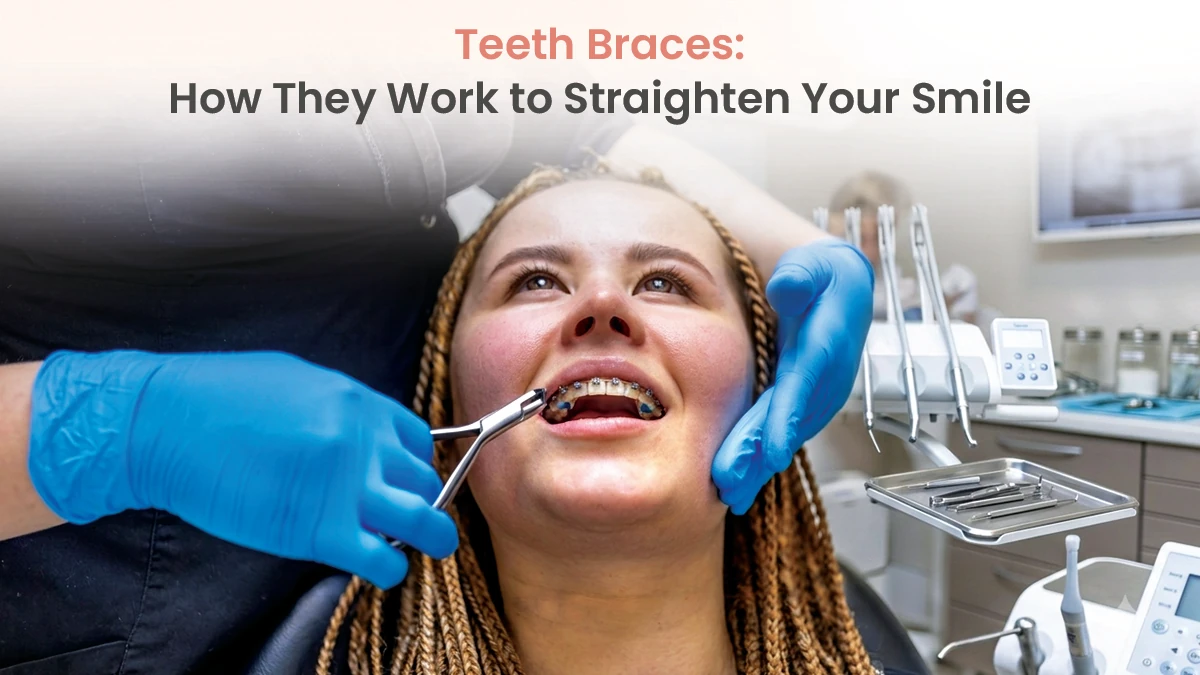
In a traditional fixed brace system, brackets are bonded to the surface of each tooth. An archwire runs through the brackets and is held in place with small elastic ties or, in self-ligating systems, with a built-in clip. The archwire is the source of the tension. As treatment progresses, the wire is periodically adjusted or replaced with a progressively stiffer one, guiding the teeth incrementally toward their target positions.
3. Why It Takes Time
Bone remodelling is not something that can be rushed without causing damage. The cells that break down bone on one side of the moving tooth and rebuild it on the other need time to complete their work between adjustments. This is why how long do braces take to straighten teeth is a question with a meaningful answer: the timeline is not arbitrary. It reflects the biology of safe, stable tooth movement.
B] Types of Braces for Teeth
The right type of brace depends on the complexity of the case, the patient's lifestyle and preferences, and the clinical judgement of the orthodontist. Here is what each option actually involves.
1. Metal Braces
Metal braces are the most established option and remain the most effective for complex cases. The brackets and wires are made from high-grade stainless steel. Modern metal braces vs. clear aligner comparisons often note that metal braces give the orthodontist the most precise control over tooth movement, which is why they remain the first choice for significant crowding, bite correction, and cases involving jaw alignment. They are also the most affordable option.
2. Ceramic Braces
Ceramic braces treatment works on exactly the same mechanical principle as metal braces, but the brackets are made from tooth-coloured or clear ceramic material, making them considerably less visible. They are a popular choice for adults who want the reliability of fixed braces without the visual prominence of metal. The trade-off is that ceramic brackets are slightly more fragile and require more careful maintenance than metal.
3. Clear Aligners
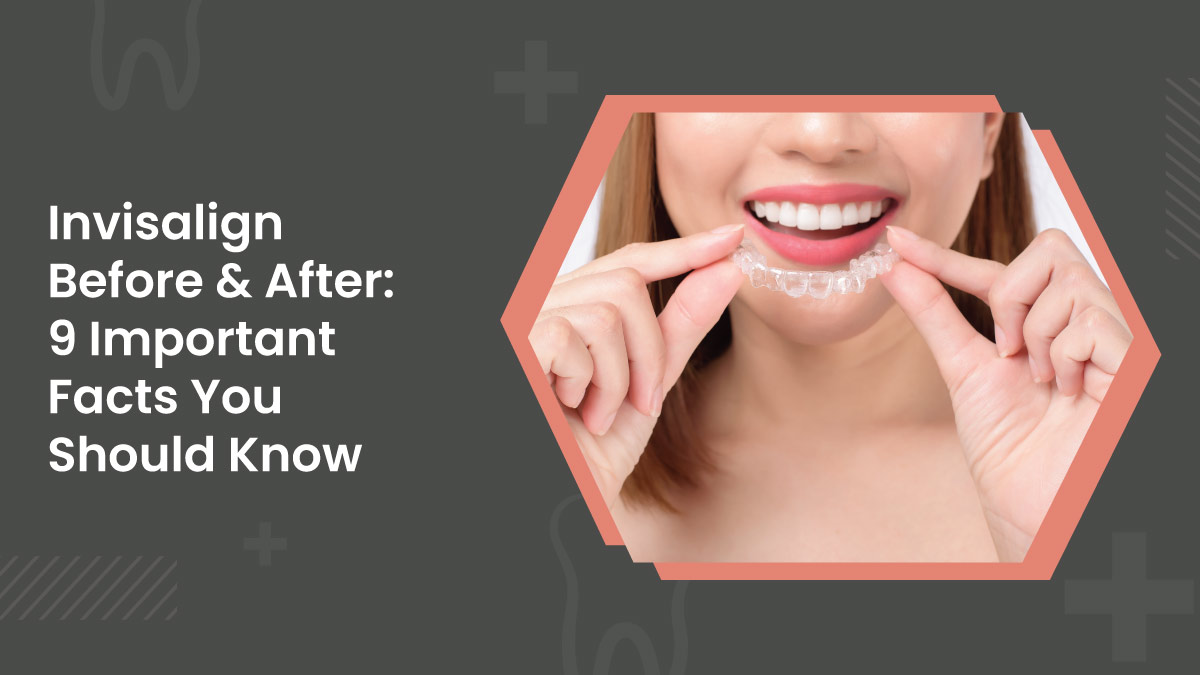
Clear aligners, of which Invisalign is the most widely known brand, use a series of custom-made, removable trays to move teeth progressively toward their target positions. The trays are changed every one to two weeks as the teeth shift. You must be wondering, braces vs. Invisalign: which is better? The honest answer is that it depends on the case.
Aligners work excellently for mild to moderate crowding and spacing. For complex bite correction or significant tooth movement, fixed braces typically deliver more reliable results. The removability of aligners is their biggest advantage and, for patients who are not disciplined about wearing them for the required 20 to 22 hours a day, their biggest limitation.
4. Lingual Braces
Lingual braces are fixed to the inside surface of the teeth rather than the outside, making them invisible from the front. They offer the precision of traditional fixed braces with full aesthetic concealment. They are the most technically demanding option to fit and adjust, and they tend to be the most expensive. They are also more likely to affect speech initially while the tongue adjusts.
C] At What Age Is It Ideal to Get Braces?
1. The Case for Treating Children Early
Orthodontists generally recommend a first assessment around the age of seven, not because treatment always begins at that age, but because some issues are most effectively addressed while the jaw is still growing. Early intervention, where indicated, can guide jaw development and reduce the complexity of treatment later.
2. The Teenage Window
The most common time for braces treatment is between the ages of eleven and sixteen, once most of the permanent teeth have come through but the jaw is still in a period of active growth. Treatment at this stage tends to move more quickly, and the results tend to be highly stable.
3. Braces for Adults
Braces for adults in mumbai are a growing category, and for good reason. Adults can achieve excellent results from orthodontic treatment at any age, provided the teeth and supporting bone are healthy. Treatment may take slightly longer than in adolescence, and the biological response to tooth movement is a little slower, but the outcomes are just as meaningful. The idea that braces are only for teenagers is outdated and worth discarding.
D] Do Braces Hurt?
1. What to Expect at the Start
There is a difference between pain and discomfort, and it is worth being clear about it. Having braces fitted does not hurt. The bonding process is entirely non-invasive. In the first few days after fitting, and again after each adjustment appointment, most patients experience a dull ache and tenderness as the teeth begin to respond to the new pressure. This is normal and expected.
2. Managing the Adjustment Period
The soreness typically peaks around 24 to 72 hours after an adjustment and then settles. Soft foods during this window make a significant difference. Over-the-counter pain relief such as ibuprofen or paracetamol manages discomfort effectively for most patients. The mouth also adjusts to the presence of the brackets over the first few weeks, and what initially feels unfamiliar becomes unremarkable quite quickly.
3. What Actually Causes Discomfort
The brackets themselves occasionally rub against the inside of the cheeks or lips, particularly in the early weeks. Orthodontic wax applied directly to the bracket resolves this immediately. Broken wires or loose brackets can cause localised irritation and should be addressed at the practice promptly rather than left.
E] How Long Does Orthodontic Treatment Take?
1. The Honest Range
For mild crowding or spacing, treatment can be complete within six to twelve months. Moderate cases typically fall in the twelve to eighteen month range. Complex cases involving significant bite correction or jaw alignment may take two years or more. Teeth braces costs in Mumbai and treatment timelines are both heavily influenced by the complexity of the case. This is why an assessment appointment is the only reliable way to get a figure that means something for your specific situation.
2. What Affects the Timeline
The type of brace matters. Fixed braces generally move teeth more efficiently than removable aligners for complex cases. Patient compliance matters too. Keeping appointments, following dietary guidance, and, for aligner patients, wearing the trays for the required hours each day, all have a direct effect on whether treatment finishes on schedule.
3. Why Rushing Is Not an Option
As with full-mouth rehabilitation, the biology of tooth movement sets the pace. Applying excessive force moves teeth faster in the short term but compromises the stability of the result and the health of the supporting bone. A treatment plan that feels slow is often a plan that is being done correctly.
F] What Happens After Braces Are Removed?
1. Retainers: The Step Most People Underestimate
The removal of braces is not the end of treatment. It is the beginning of the retention phase, and this phase is permanent. Teeth have a natural tendency to drift back toward their original positions after orthodontic treatment, a phenomenon called relapse. Retainers hold the teeth in their new positions while the bone around the roots fully stabilises and then continue to do so long-term.
2. Fixed vs Removable Retainers
Fixed retainers are thin wires bonded to the back surface of the front teeth. They are invisible, require no patient compliance, and provide continuous retention without any effort. Removable retainers, typically worn at night, are the other common option. Many patients end up with both: a fixed retainer for the front teeth and a removable retainer worn nightly for overall arch retention.
3. The Result Worth Protecting
The outcome of well-executed orthodontic treatment, straight teeth, a balanced bite, and a smile that works the way it should is one worth protecting carefully. Patients who commit to their retainer wear long-term keep their results indefinitely. Those who do not often find themselves back in the orthodontist's chair years later.
If you are ready to explore what treatment could look like for you, our dental clinic in Prabhadevi for orthodontic care combines specialist expertise with a clear, personalised approach from the first assessment to the final retainer fitting.
One appointment tells you your options, your timeline, and your cost.
Conclusion
Braces are one of the most evidence-backed, consistently effective treatments in dentistry. The mechanics are well understood, the results are predictable, and the options available today mean that almost everyone can find an approach that fits their life.
Whether you are twelve or forty-two, whether you want metal braces for the most effective correction or clear aligners for the least visible treatment, the starting point is the same: a proper assessment with someone who will give you an honest picture of what your teeth need and what is possible.
That conversation is easier than most people expect. Contact our team at Enamel Dental Specialities in Prabhadevi to book yours.