How To Stop Cavity Pain: Treatments & Relief Options That Work
A toothache from cavity is one of those pains that can make you stop in your tracks. It can turn the consumption of food into a burden, deprive you of sleep, and exhaust you. Although a short-term solution can get you through the day, a lasting solution is one that treats the cause. You will learn why cavities hurt, how to recognize that you have one, the best medicine for cavity pain to feel better in the short term, and what procedures can be offered by dentists to eliminate the issue.
A] Understanding Tooth Cavities and Pain
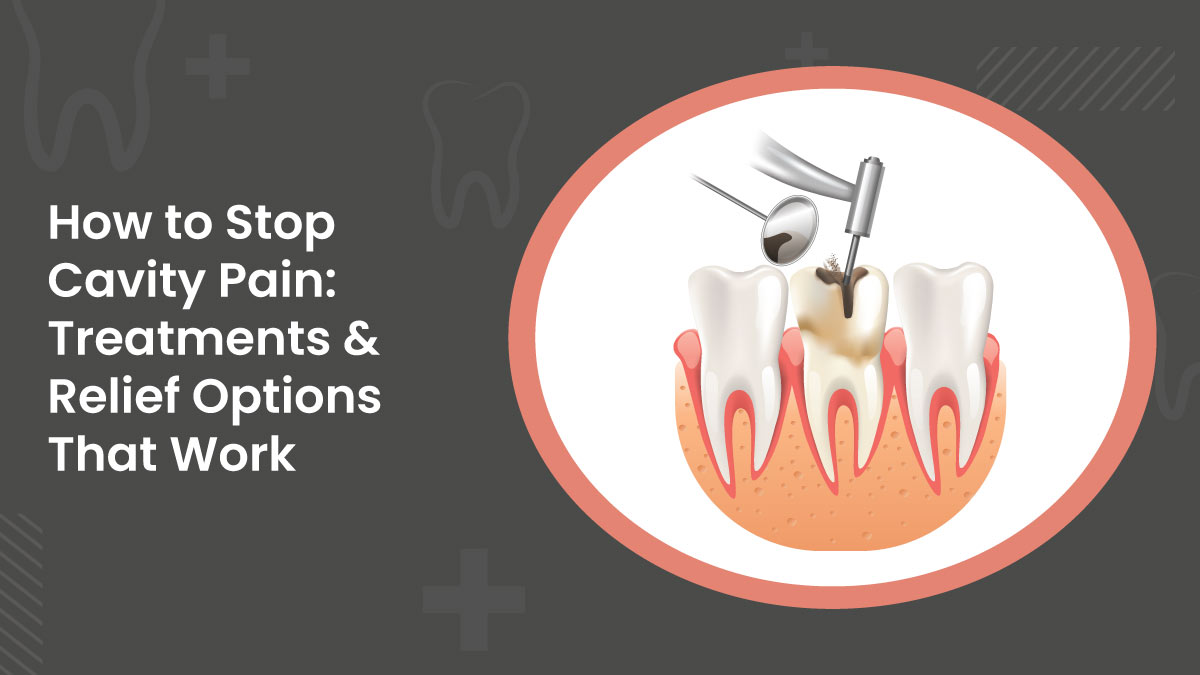
A hole is created when acids, through the production of bacteria, eat into the outer enamel of a tooth. This normally occurs when food particles, particularly sugar and starch, remain on the teeth. In the long run, the enamel becomes weak and a hole starts to develop.
The pain begins when the decay has passed through the enamel. The dentin beneath it is much more sensitive, and in case the hole reaches the pulp, which is the inner part of the tooth that contains nerves and blood vessels, the pain can be excruciating. This is why cavity pain may be sharp at one time and a deep throbbing pain at another.
B] Common Symptoms of Cavity Pain
Tooth cavities not necessarily cause pain in the initial stages, but when they do, the symptoms are unmistakable. Sensitivity is observed by many people when they take something sweet, or when they take something hot or cold to drink. The pain can persist even after you have stopped eating, or it can come in the form of a sharp pain.
There will also be changes in your teeth. Dark spots, a hole in tooth pain, or jagged edges, which were not present earlier, are indications of decay. Biting down exacerbates the pain, or the cavity tends to flare at night, then it is more advanced. Read on to know how to make a cavity stop hurting.
C] Immediate Relief Options for Cavity Pain
There are a few ways of cavity pain relief until you get to the dentist:
- Over-the-counter medicine: Painkillers like ibuprofen or paracetamol are often the first line of defense. They ease discomfort and reduce inflammation, giving you a few hours of relief.
- Cold compress: an ice pack, wrapped in a cloth, against your cheek can numb the pain and calm swelling. This works best if the area feels tender or inflamed.
- Saltwater rinse: warm salt water can reduce irritation and flush out bacteria around the sore tooth. It’s simple and effective as a short-term option.
These methods are helpful, but they don’t fix the problem. They buy you time, nothing more. Without toothache decay treatment, the decay will keep spreading and the pain will come back stronger.
D] Professional Treatments for Tooth Decay and Cavity Pain
How to get rid of a tooth cavity? The doctors may do many treatments depending on how much damage has been done:
- Dental fillings: A small cavity in tooth is often repaired with a filling. The decay is removed and the hole is sealed, restoring strength to the tooth.
- Inlays, onlays, or crowns: When the damage is larger, a filling may not be enough. Inlays and onlays fit the affected area, while crowns cover the tooth completely.
- Root canal treatment: If the decay has reached the pulp, a root canal may be needed. The infected tissue is removed, the inside of the tooth is cleaned, and it’s sealed to prevent further problems. This not only stops the pain but also saves the tooth.
- Tooth extraction: If the tooth is too damaged to repair, extraction may be the only option. A dentist in Prabhadevi can then suggest replacements like an implant or a bridge.
Professional care doesn’t just relieve pain, it tackles the source of the problem and helps prevent new cavities from forming.
E] When to See a Dentist Immediately
Not all toothaches can wait. You should book an urgent appointment if:
- The pain is severe or constant, even after taking medicine
- There’s swelling in your gums, jaw, or face
- You have a fever or notice signs of infection
- A tooth has broken, and you can see a visible hole
These are signs that the cavity has progressed and needs prompt attention.
Conclusion
Cavity pain is your body’s way of telling you something isn’t right. Home remedies like rinsing with salt water or using a cold compress can make life easier for a while, but they aren’t long-term answers. The only real solution is dental treatment. Whether it’s a small filling or something more involved like a root canal, getting care early makes the process simpler and far less painful. If you’re struggling with a cavity, don’t wait until the pain becomes unbearable. Getting cavity treatment in Prabhadevi near you can help restore comfort and protect your smile.
Book an appointment with an expert today.