How Long Do Dental Implants Last? Lifespan and Care Tips
Do dental implants last a lifetime?
We often hear a version of the same question regularly. A patient sits across from us and says, "If I'm going to spend this much on an implant, I need to know it will last." It is a completely fair thing to ask. And the answer is a good one, provided we give you the complete picture rather than the oversimplified version.
Most dental clinics will tell you that implants "can last a lifetime". What they don't tell you is that an implant is not one object. It is a three-part system, and each part has a different lifespan. Understanding this distinction will tell you more about implant longevity than anything else in this blog.
If you are weighing your options or considering dental implants in Prabhadevi, let's go through this properly.
If you are weighing implants against other options, a thorough assessment is the clearest place to start.
A] The Three Parts of a Dental Implant (And Why Each One Has a Different Lifespan)
Think of a dental implant the way you would think of a lamp post on a Mumbai street. The post buried in the ground lasts decades without attention. The fitting connecting post to the fixture occasionally needs to be tightened. The light on top takes the daily exposure and eventually needs replacing. The post is almost never the problem.
A dental implant works the same way.
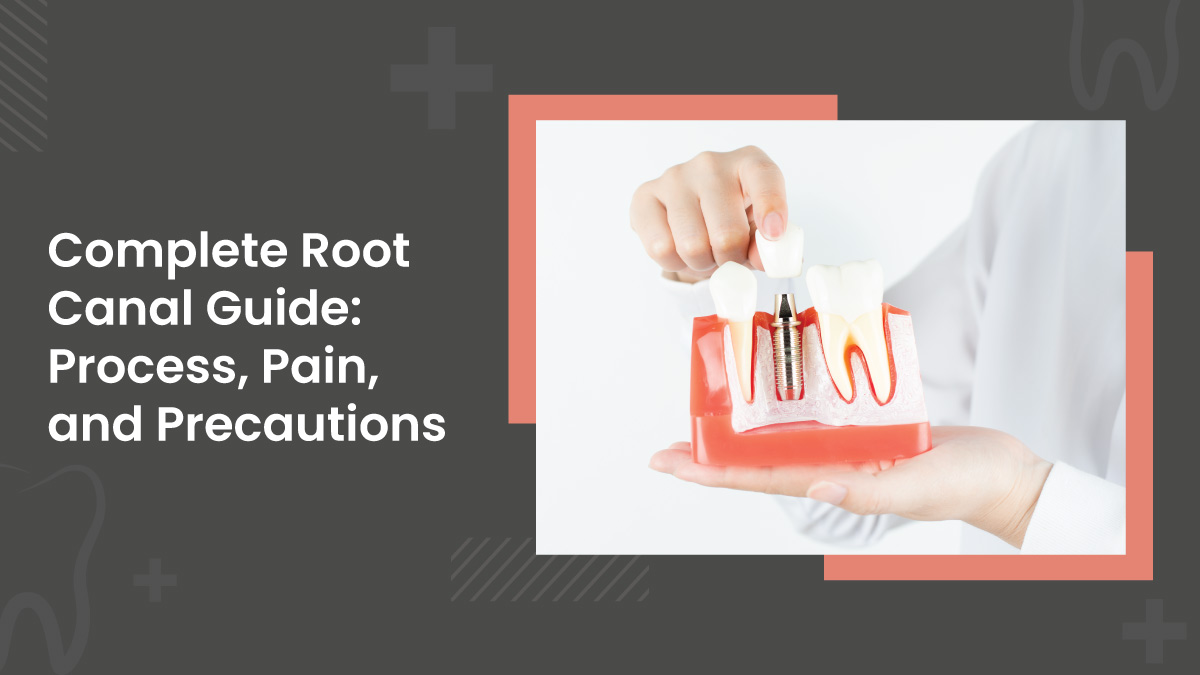
- The titanium post is surgically placed into the jawbone and fuses with the bone through a process called osseointegration. This is the most durable component. When placed well and maintained properly, it is designed to be permanent.
- The abutment connects the post to the crown. It typically lasts as long as the post but may need adjustment if excessive force is placed on the implant over time.
- The crown is the visible, tooth-shaped cap that absorbs daily chewing forces, temperature changes, and wear. It lasts 10 to 15 years before needing replacement. This is almost always the first component that needs attention, not the implant post itself.
| Component | Typical Lifespan | Most Common Reason for Replacement |
|---|---|---|
| Titanium post (fixture) | 20+ years to lifetime | Peri-implantitis or bone loss (rare with proper care) |
| Abutment | 15+ years | Excessive bite force or loosening |
| Crown | 10 to 15 years | Normal wear and chewing forces |
Most patients come in assuming that "replacing the implant" means starting from scratch. In almost every case, it means replacing the crown, which can be done through a straightforward procedure and does not require surgery.
B] What the Research Actually Says
How long do dental implants last?
Clinical studies report a 95 to 97% survival rate for dental implants at 10 years. That figure holds up significantly at 20 years. No other tooth replacement option comes close, and it’s all thanks to a biological bonding process called ‘osseointegration’.
Once the jawbone grows around and bonds with the titanium surface of the post, the integration is remarkably stable. Think of it as the bone adopting the implant as part of itself.
Compare this to the alternatives:
| Treatment | Average Lifespan | Needs Replacement? |
|---|---|---|
| Dental Implant | 20+ years (post); 10 to 15 years (crown) | Crown, yes; post, rarely |
| Dental Bridge | 5 to 15 years | Yes, often requiring tooth preparation |
| Dentures | 5 to 8 years before adjustment or replacement | Yes, regularly |
An implant is not just the most durable option. Over a 20-year period, it is frequently the most cost-effective one as well.
C] How Long Do Dental Implants: 6 Factors That Play a Crucial Role
A 95% implant success rate is a population figure. Your individual dental implant lifespan could depend on specific, largely controllable factors. Here are the six that matter most.
1. Oral hygiene
Implants cannot decay. But the gum and bone around them absolutely can be damaged by bacteria. Poor hygiene leads to peri-implantitis, an infection that progressively destroys the bone supporting the implant. So, while the implant itself does not fail, the environment around it does.
2. Smoking
Smoking impairs blood supply to the gum tissue and slows healing after placement. Studies show smokers have notably higher failure rates. This is one of the most controllable risk factors and one we always discuss before recommending implant treatment.
3. Bruxism (teeth grinding)
Bruxism (read: grinding that most patients are completely unaware they do) places excessive force on the crown and, over time, on the abutment. Grinding happens at night, silently, and can accumulate damage over years. A custom night guard is strongly recommended for any implant patient who grinds
4. Diabetes
In India, where diabetes prevalence is among the highest in the world, this connection matters, and most patients never make it. Uncontrolled diabetes impairs healing and increases infection risk around the implant. Well-managed diabetes does not prevent successful implants. It requires closer monitoring. The distinction is important.
5. Bone quality at placement
The post needs a solid foundation of healthy bone to integrate properly. Low bone volume or density is a genuine risk factor, which is why a thorough assessment before placement is not optional. It is the basis of a good outcome.
6. Quality of placement
Implant positioning, angle, and the system used all influence how forces are distributed across the implant over time. This is not a procedure where cost-cutting serves the patient.
D] Peri-Implantitis: The One Thing Most Patients Haven't Heard of
Peri-implantitis is an infection of the gum and bone surrounding an implant. Think of it as gum disease around a natural tooth, except that it tends to progress faster and with far fewer warning signs.
That silence is exactly what makes it dangerous.
In the early stages, peri-implantitis causes little to no pain. Patients carry on their routines, assume everything is fine, and by the time any discomfort appears, significant bone loss may already have occurred. What begins as a manageable cleaning procedure becomes a complex intervention. That is the outcome we are always trying to prevent.
Early warning signs to watch for:
- Bleeding around the implant when brushing, even minor
- Swelling or redness of the gum near the implant
- A slight looseness in the crown
- Discomfort when biting that was not there before
Note: As peri-implantitis does not cause obvious pain in its early stages, regular professional check-ups are the only reliable way to catch it before it becomes a serious problem.
Come in promptly if you notice any of the above. Early-stage peri-implantitis is manageable. Late-stage can threaten the implant entirely. The window between those two outcomes is exactly where your six-monthly check-up lives.
E] How to Make Your Dental Implant Last Longer?
Now the big question is: how long do dental implants last with proper care? By following these dental implant care tips, you can ensure your implant lasts as long as possible.
1. Daily hygiene
Brush twice daily with a soft-bristled toothbrush and a non-abrasive toothpaste. This last point is specific and worth noting: some whitening toothpastes contain abrasive particles that scratch implant crown surfaces over time, accelerating wear. Clean between the implant and adjacent teeth daily with interdental brushes or implant-specific floss. An antibacterial mouthwash can help reduce bacterial load at the gum margin.
What to avoid. Biting on ice, hard sweets, or bones places the kind of impact force on a crown that normal chewing does not. Avoid using your teeth as tools. It would be a mistake to think of these choices as minor preferences, as they are the exact difference between a crown lasting 10 years and 15 years.
2. Night guard for bruxism
If you grind your teeth, a night guard is not optional. The force generated during grinding can chip or crack the crown and stress the abutment connection gradually over time. A properly fitted night guard is a straightforward, inexpensive measure compared to premature crown replacement.
3. Professional monitoring
Six-monthly check-ups are considered a clinical necessity for implant patients. Each visit involves examination of the gum tissue, probing to assess pocket depth around the implant, and periodic X-rays to monitor bone levels. This is how peri-implantitis that is caught early at six months stays a minor issue rather than becoming a major one.
4. Systemic health
Keep blood sugar controlled if you have diabetes. If you are on medications that affect bone density or healing, ensure your dentist is aware. Your general health and your implant's health are not separate conversations.
F] When Does a Dental Implant Actually Need to Be Replaced?
Here is the distinction most patients miss, and it is worth being direct about it.
When an implant "needs replacing", it is almost always referring to implant crown replacement. The crown wears down from years of chewing forces and, after 10 to 15 years, may chip, shift in fit, change colour, or simply reach the end of its functional life. Our specialist team handles this routinely.
Signs the crown may need attention include:
- Visible chipping or wear
- A change in colour
- Slight looseness
- Sudden discomfort when biting
Signs the titanium post itself may be in trouble include (far less common):
- Mobility of the implant when pressed
- Persistent aching at the implant site
- Recurring infection despite good hygiene
- Visible bone loss on X-ray.
True post failure is uncommon when placement was done well and the patient has maintained regular care. In fact, most dental implant failure signs usually turn out to be minor crown or gum issues. The reality is, these are fairly straightforward to fix, especially if we catch them early.
Our specialists will give you an honest clinical picture and all the time you need to decide.
Conclusion
A well-placed, well-maintained implant will almost certainly never require a major intervention. The post, in most cases, is a lifetime solution. The crown will eventually need replacing, which is a minor procedure and not a setback. The gum tissue around the implant, when monitored consistently, gives you nothing to worry about.
It’s important to be up to date with your dental appointments. What starts as a missed check-up could end up becoming undetected peri-implantitis. What starts as undetected peri-implantitis could become bone loss. What starts as bone loss could become a far more complex and costly intervention than any six-monthly visit ever was.
The patients whose implants are still performing beautifully after 15 or 20 years share one thing. They never stopped coming in.
Visit our specialists in Prabhadevi for an honest assessment, transparent treatment planning, and expert care in an environment that puts you completely at ease.