Dentures vs Full Mouth Implants: Which Is the Best for You?
If you’re trying to decide between dental implants vs dentures, you’re not alone.
It’s one of the most common concerns patients have when exploring tooth-replacement options. Both treatments can restore your smile, but the experience, longevity, comfort, and cost can feel very different.
In this guide, we break down the entire process for each option, what daily care looks like, how to know which treatment is right for you, and even the alternatives available.
By the end, you’ll have a clear understanding of what to expect and the confidence to choose the solution that fits your lifestyle, oral health, and long-term goals.
Still unsure which option is right for you? Schedule an appointment and let our experts guide you.
A] Dentures vs. Implants: What Really Happens During the Procedure
Dental Implants
If you’re thinking about getting dental implants, here’s what you can expect. Dental replacements or implants are recommended as a treatment option for people that have a healthy enough jawbone to support them.
Permanent dental implants have grown in popularity as a treatment option in recent years, especially amongst adults in their 50s and 60s, as they feel, function and look just like natural teeth.
The Procedure:
- First, your dentist will remove any decayed or damaged teeth (if they haven’t already been taken out).
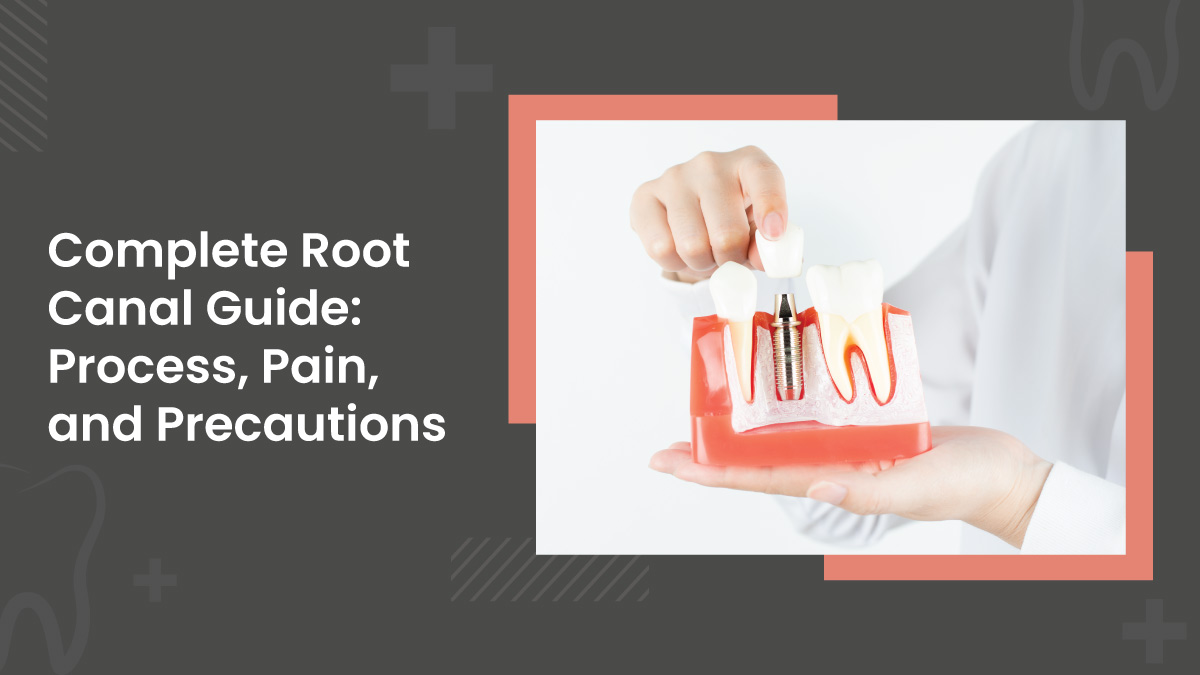
- Next, your dentist will gently drill a small hole in the jawbone to place a metal post. This post will be the de facto root of your new tooth.
- Over the next few months, your bone naturally grows around the post, locking it securely in place. When that healing is complete, your dentist will place a connector piece called an abutment on the top of the post. In some scenarios, your dentist may choose to fit the abutment at the same appointment as the implant.
- Finally, a custom crown that is moulded to match the shape and colour of your natural teeth is attached to the abutment. This will give you a natural-looking tooth that can last for years with proper care.
Dentures
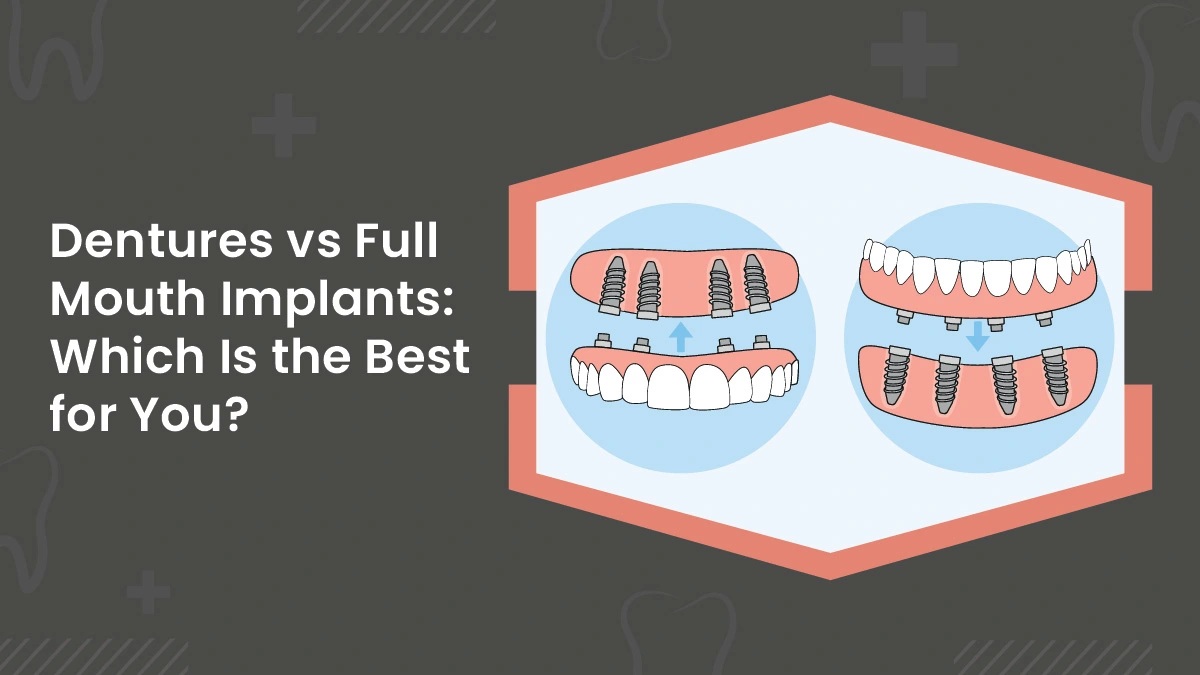
If you’re missing several teeth or even all your teeth and want a quicker, non-surgical solution, then dentures may be the right treatment option for you. You can opt for full dentures (to replace all the teeth in your upper or lower jaw) or partial dentures, which will fill in the gaps where your teeth are missing.
The Procedure:
- To begin, your dentist will take detailed impressions of your gums and mouth to ensure that the dentures are a comfortable and secure fit. They’ll also check your bite and how your jaws align so your new dentures allow you to chew and speak naturally.
- Next, a trial set of dentures is created and placed in your mouth for testing. This is done to check your comfort with the shape and alignment of the dentures and to fine-tune them before the final set is made.
- The final dentures will then be kept in place with a gentle adhesive, which keeps them secure, but they can still be easily removed for cleaning.
Dentures are often considered a simple and affordable way to bring back your smile and comfort while eating or speaking.
B] Maintenance of Dental Implants vs. Dentures
1. Maintenance for Dental Implants
Care measures for dental implants are similar to what you do as part of your daily oral hygiene process for your natural teeth. You should brush at least twice daily, preferably with the help of a soft-bristle brush, along with daily flossing and regular dental checkups.
2. Maintenance for Dentures
If you want your dentures to last over the long term, you will have to exercise a strict daily maintenance regimen. For example, you shouldn't be wearing them overnight and should instead soak them in a special cleaning solution or water.
Your dentures need to be cleaned daily, and this will require you to remove and brush them after every meal. You also need to gently brush away any adhesive residue remaining on your gums.
As your bite evolves over time, you may need to get your dentures refitted more than once. In the case of implants, you may have to replace a crown if the original one becomes broken or cracked.
C] How to Decide Between a Denture or an Implant
If you’re currently deciding which treatment option to proceed with, you need to take into account the following factors:
1. Age
As discussed throughout, dental implants are considered a permanent treatment solution. If you are in your 50s or 60s and even beyond, you may be a suitable candidate, depending on your bone health and overall medical condition. With proper care, you can expect dental implants to provide several decades of reliable use.
If you’re an older adult who doesn't want to experience an invasive and time-consuming treatment procedure, then you could opt for dentures instead.
2. Bone density
To be eligible for a dental implant, you must have an adequate amount of jawbone material to successfully support the metal post. If you have suffered bone loss in the jaw because of age, gum disease, tooth loss or age, you will not be considered a candidate for an implant procedure.
It is possible to fortify bone density with a dental bone grafting procedure. However, this will make the process more invasive and expensive for you.
3. Function and feel
Overall, dental implants can provide better comfort and chewing compared to dentures.
However, a 2019 study found that patients who have had an implant-supported overdenture (a hybrid of implants and dentures) fitted experienced greater comfort and chewing function than conventional dentures.
4. Hygiene
If you’re unlikely or unable to take proper care of your dentures, then implants are a better option (provided they fit within your budget), as they require less daily attention. It’s important to ask yourself how willing you are to take proper care of your dentures.
D] Alternatives to Dental Implants and Dentures
There are other treatment options you can opt for to replace your missing teeth. You can discuss with your dentist about the following options:
Dental bridge
If you’re missing multiple teeth, a dental bridge can be one of the treatment options to help fill the gap. This is also sometimes called a fixed partial denture, where a bridge is attached to the surrounding teeth to provide additional support.
Temporary partial denture
A temporary partial denture, or flipper, is a detachable retainer-like contraption that houses one or multiple teeth. These prosthetic teeth can give your smile a natural look and can be easily removed for a cleaning.
Flippers are generally considered the most economical treatment option for missing teeth, but they’re also not particularly durable. Usually they are used by patients who are waiting for a fixed bridge or implant.
However, they can also be a long-term solution for a patient if their dentist concludes that replacement flippers may likely be necessary over time.
Snap-in denture
Snap-in dentures are a hybrid solution between implants and dentures, as they don’t require an adhesive to be kept in place. They’re also referred to as overdentures and are reliant on a small number of implants to maintain their position in the mouth.
With this approach you won’t need an abutment and post for every missing tooth, but instead the dentures will be attached with the help of a few snaps on the bottom. These snaps ensure that 2 to 4 posts are attached to each jaw.
Snap-in dentures can be configured to be permanent fixtures or detachable for cleaning. Considered significantly more stable than conventional dentures, these dentures are, however, also more expensive.
Let’s explore your options together. Schedule your smile evaluation today.
Conclusion
Whether you decide to opt for an implant or denture, the decision needs to be made with careful consultation with your dentist.
Dental implants can be more expensive initially, but they can be durable for 20 or more years compared to dentures, which you may have to make occasional replacements or adjustments to through the years. Dentures, on the other hand, are a less invasive procedure than implants.
Weigh all your available treatment options with your priorities and budget constraints, and you should be able to confidently make the right choice.
For personalised cosmetic dentistry treatment, consult the best dental clinic in Prabhadevi begin planning your smile transformation today.