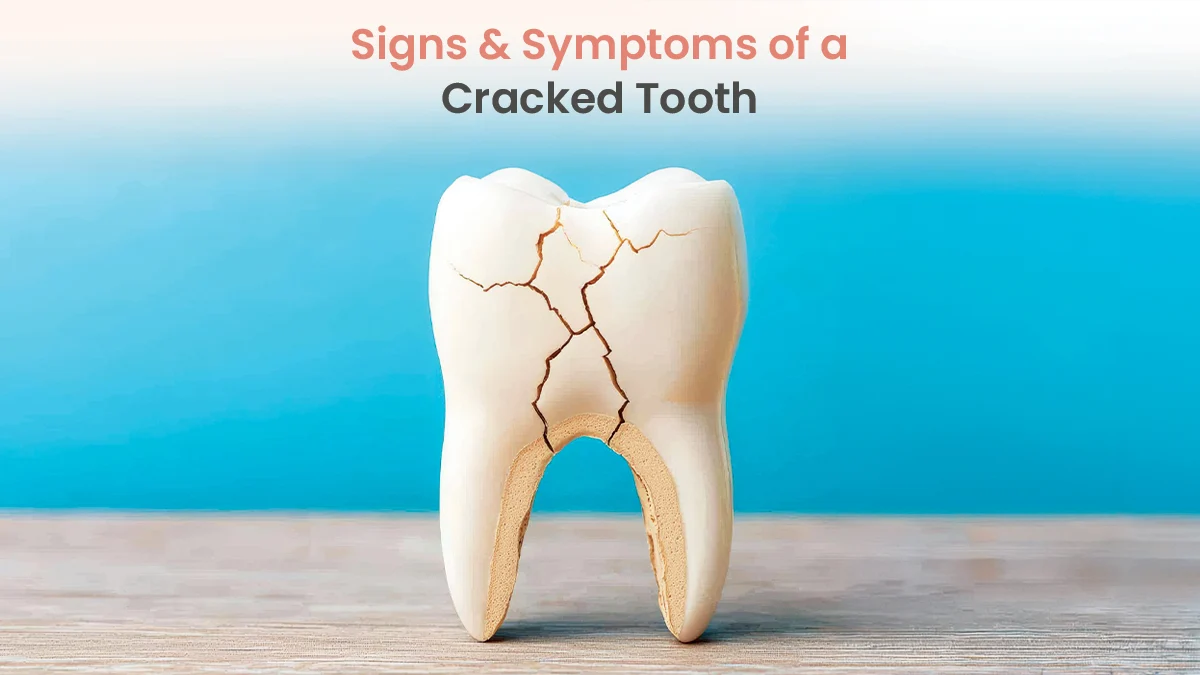
Cracked Tooth Symptoms: When Do You Need Treatment?
We see this more often than you might expect.
A patient sits across from us and says, "I've had this on-and-off pain for months, but I kept thinking it would go away." It doesn't go away. But the longer you wait, the more complicated things become. A cracked tooth doesn't always cause obvious, constant pain. That's what makes it so easy to ignore.
Your mouth is trying to tell you something if you've been experiencing any of the following:
- A sharp twinge when you bite down
- Sensitivity to cold that lingers a moment too long
- A dull ache that comes and goes without explanation
Ignoring these signs can lead to larger issues that require far more extensive treatment later on.
At Enamel Dental Specialities in Prabhadevi, we provide specialist-led care, transparent treatment planning, and a calm, cutting-edge environment that puts you completely at ease. Our experts have put together this comprehensive guide to help you deal with what feels like a broken tooth or an unexplained dental discomfort.
Worried about a cracked tooth? Book an examination today.
A] What Exactly Is a Cracked Tooth? (And Why Is It So Hard to Diagnose?)
Let’s start with a quick picture of what's inside your tooth.
Your tooth has three layers. The outermost layer is enamel, the hard shell that protects everything inside. Beneath it is dentin, which is softer and more sensitive. At the very centre is the pulp, a living tissue containing the nerves and blood supply of the tooth.
The Problem with "Silent" Cracks
Now here's what makes a cracked tooth particularly tricky. A crack can sit quietly in the enamel layer and cause almost no symptoms. Or it can travel deeper toward the pulp, where it starts irritating the nerve. The pain it produces is often intermittent, not constant. That intermittent nature is exactly why patients wait and why even good dentists sometimes struggle to find it on a standard X-ray.
Understanding Cracked Tooth Syndrome (CTS)
We want to discuss a term here that many patients encounter after a frustrating non-diagnosis: Cracked Tooth Syndrome (CTS). If you've been told "nothing shows up on the X-ray" but your discomfort keeps returning in the same tooth, this is likely what you're dealing with. It is a recognised clinical condition. What you need is a more thorough assessment with the right diagnostic tools.
B] The Five Types of Tooth Cracks and What Each One Means for You
One of the first things you need to understand is that not all cracks are the same. The type of crack you have tells us a great deal about urgency, treatment, and outcome. Some are genuinely nothing to worry about. Others need attention fairly quickly.
| Type | Pain Level | Visible? | Need Treatment? | Typical Fix |
|---|---|---|---|---|
| Craze lines | None or very mild | Sometimes | Usually no | Monitoring or cosmetic treatment |
| Fractured cusp | Mild to moderate | Sometimes | Yes | Dental crown |
| Cracked tooth (incomplete vertical) | Moderate to sharp | Rarely | Yes | Crown or root canal + crown |
| Split tooth | Severe | Possibly | Yes, urgently | Extraction, then implant |
| Vertical root fracture | Mild at first | No | Yes | Complex treatment or extraction |
- Craze lines are the most common and the most harmless. These are fine surface cracks in the enamel that almost every adult has to some degree. They don't go deep, they rarely cause sensitivity, and most of the time they need no treatment whatsoever.
- A fractured cusp typically happens around an existing filling where the tooth structure around it has weakened over time. A portion of the biting surface breaks away. It can be uncomfortable, but because these fractures usually don't involve the pulp, a crown is generally all that's needed.
- An incomplete vertical crack is the one we see most often and the one you should pay the closest attention to. This crack runs vertically down the tooth but hasn't split it into two pieces yet. Caught early, a crown can hold the tooth together and stop the crack in its tracks. If it has reached the pulp, root canal treatment followed by a crown becomes the path forward. The key word here is "early".
- A split tooth is what an incomplete vertical crack becomes if left alone too long. The tooth has been divided into two distinct segments. At this stage, saving the entire tooth is usually not possible. This is the outcome we are always trying to prevent.
- A vertical root fracture begins at the root and grows upward, often with very little pain in the early stages. Many patients only discover it when they develop a gum infection near that tooth. Treatment at this stage is complex, and the earlier it is found, the better the options.
C] 7 Symptoms You Should Never Ignore
1. Sharp pain when biting down that releases when you lift off.
This is the most characteristic symptom of a crack. When you bite, the crack flexes slightly and stimulates the nerve. When you release the pressure, the pain fades. It's brief, which is why people dismiss it.
2. Cold or hot sensitivity that lingers after the stimulus is gone.
A quick flash of sensitivity to cold is not unusual. But if the sensation hangs around for 10 to 30 seconds after you've swallowed, it could indicate that the pulp is involved. The crack has likely gone deeper than the enamel.
3. Sensitivity specifically to sweet foods.
This one catches patients off guard. Sweets affect exposed dentin through osmotic pressure. If a specific tooth consistently reacts to something sweet, make a note of it and mention it when you come in.
4. Pain you can't quite locate.
This is one of the most confusing aspects of broken tooth symptoms for patients. You know something hurts but pointing to exactly which tooth is difficult. This is ”referred pain”. The nerves in the jaw share pathways, and the brain struggles to pinpoint the source accurately. It means the crack is irritating the nerve in an indirect way.
5. Swelling in the gum around one specific tooth.
A localised swelling near a single tooth, particularly when there's no visible cavity, is a signal that you should take seriously every time. It often means infection is developing at or near the pulp. This one should not be left for weeks.
6. A dull, intermittent ache with no obvious explanation.
No decay. No abscess on the X-ray. Everything "looks fine", but a particular tooth keeps nagging. In our experience, a hidden crack is one of the most common explanations for this exact scenario.
7. A visible line or chip you can see or feel with your tongue.
Sometimes patients come in and say, "I can feel something rough on my tooth." They've noticed it for months but waited because there was no pain. A visible change in the tooth surface, however small, is worth showing us. A painless crack today is a symptomatic crack tomorrow.
D] When Is A Cracked Tooth A Dental Emergency?
The word "emergency" can feel alarming, so let’s frame this practically. Not everything requires you to call us immediately. But some situations genuinely do, and you should be able to tell the difference.
Please seek care the same day if you have any of the following:
- Severe pain that won't ease with over-the-counter medication
- Swelling spreading into the cheek, jaw, or face
- Fever alongside dental pain
- Pus or discharge visible near the gum
- A piece of tooth that has physically broken off
These are signs that infection may be spreading or that the tooth structure has been significantly compromised. Don't wait on these.
Book an appointment within the week if you have:
- Intermittent sharp pain when biting, even if it passes quickly
- Temperature or sweet sensitivity that lingers
- A gum swelling near one tooth that isn't worsening but isn't going away
You can monitor at home and schedule a routine check-up if you have:
- A craze line you can see but which causes no sensitivity or pain
- A very minor chip with no symptoms at all
Even in that last category, it is worth bringing up at your next visit. We often catch the early stages of progression before any symptom appears, and that window of time is where the simplest treatments live.
E] How Dentists Diagnose Cracked Tooth
When you come in with suspected cracked tooth pain, the process we follow is straightforward and comfortable. Here is exactly what we do.
- The bite test: We ask you to bite firmly on a small stick or cotton roll, one tooth at a time. The tooth that produces a sharp response on biting or on release gives us our first strong indication of where the crack is.
- Transillumination:We shine a fibre-optic light through the tooth. Healthy tooth structure carries the light through evenly. A crack interrupts that path and appears as a dark line. This reveals cracks that no X-ray would show.
- Staining dye: A special dental dye is applied to the tooth surface. It follows the crack path and makes it visible. It also means you can see exactly what we're looking at, which patients usually appreciate.
- Periodontal probing: We gently probe around the gum line to check whether the crack has extended below the surface into the root. This is an important step because a crack that has gone below the bone changes our treatment approach.
- CBCT / 3D cone beam CT scan: For complex cases, particularly when we suspect a vertical root fracture, we use three-dimensional imaging. It gives us a level of detail that standard X-rays simply cannot provide. It also means we can plan treatment with confidence rather than uncertainty.
F] Treatment Options For A Cracked Tooth: What Happens At Each Stage
The right cracked tooth treatment procedure always depends on the type and depth of the crack. You might be worried about the cost of the cracked tooth repair, but there is no universal answer, and you should be cautious of any approach that doesn't start with a thorough diagnosis. Here's what each path looks like.
- Dental bonding or contouring is the gentlest option and works well for craze lines and very minor chips. It requires a single visit, involves no discomfort, and preserves your natural tooth structure completely.
- A dental crown: is the most common answer for a cracked tooth where the pulp is still healthy. Think of it as a fitted cap that goes over the entire tooth, holding it together and preventing the crack from spreading further. This is the treatment we aim for when a crack is caught at the right stage. Our crown and bridge services in Prabhadevi take care of this from initial assessment through to the final fitting.
- Root canal treatment followed by a crown: becomes necessary once the crack has reached the pulp. We are aware that root canal treatment has a reputation that it doesn't deserve. In reality, the procedure is comfortable, takes one or two appointments, and removes the source of the pain entirely. The crown placed afterwards gives the tooth the protection it needs to last for many years.
- Dental veneers: are a beautiful solution for front teeth with surface cracks that haven't reached the dentin. If the issue is largely aesthetic and the tooth's structural integrity is intact, a veneer may be the most appropriate path forward. We offer cosmetic dentistry treatment in Prabhadevi for situations exactly like this.
Extraction followed by an implant: is the last resort and is only recommended when a crack has progressed beyond what any restorative treatment can address. A well-placed implant restores both function and appearance fully, so if this becomes the recommendation, please know that the outcome is a good one.
A quick reference guide:
| Crack Type | Recommended Treatment |
|---|---|
| Craze Line | Monitoring or bonding |
| Fractured cusp | Crown |
| Incomplete vertical crack (pulp intact) | Crown |
| Incomplete vertical crack (pulp involved) | Root canal + crown |
| Split tooth | Extraction + implant |
| Vertical root fracture | Complex treatment or extraction |
Not sure if your tooth is cracked? Talk to our dental team.
FAQs
A crack in the tooth allows pressure and temperature changes to reach the nerve, causing sharp or intermittent pain. Over time, if left untreated, the crack deepens and bacteria can enter the pulp, leading to infection.