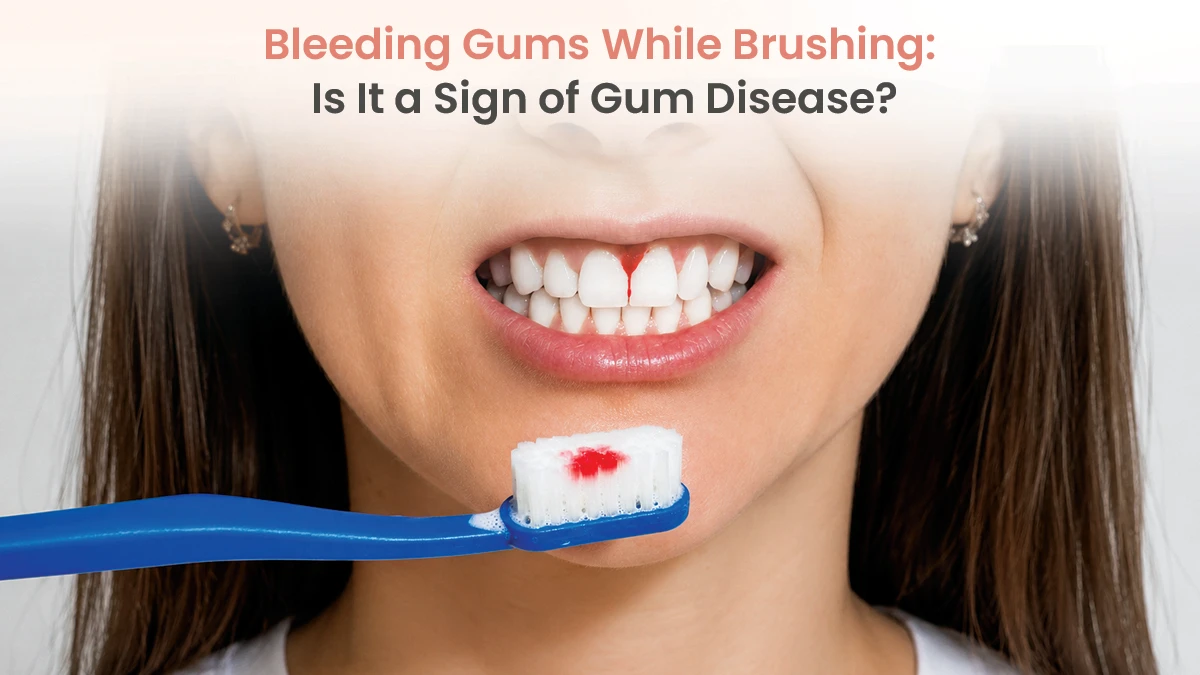
Bleeding Gums While Brushing: Is It a Sign of Gum Disease?
You spit into the sink and notice a tinge of pink. For a moment, you pause. It happened yesterday too. Maybe the day before that. You rinse, carry on, and tell yourself it is probably nothing.
But the question stays with you.
Here is the thing: that question is worth answering properly. Bleeding gums causes range from something as correctable as brushing technique to early gum disease signs that are genuinely easier to treat today than they will be in six months.
The good news is that most people who catch this early walk away with a simple, clear plan. This guide will help you understand what is actually going on, what to watch for, and when it is time to get a professional set of eyes on it.
And if you are based in Mumbai, our team offering specialist gum disease treatment in Prabhadevi at Enamel Dental Specialities can give you a thorough assessment and a clear way forward.
Get expert gum care right here in Prabhadevi.
A] Is It Normal for Gums to Bleed While Brushing?
The Short Answer
Is it normal for gums to bleed while brushing?
Not really, no. Healthy gum tissue does not bleed from routine brushing. When it does, it is almost always a sign of some degree of gum inflammation, even if that inflammation is mild and entirely reversible at this stage.
When It Can Be Temporary
A small amount of bleeding when you first start flossing regularly can settle within a week or two as your gums adapt. That is a normal adjustment. But bleeding that happens every time you brush, or that has been going on for more than two weeks, is your gums trying to tell you something. Think of it less as an alarm and more as a nudge. An early, very treatable nudge.
B] Common Causes of Bleeding Gums
1. Plaque Buildup Along the Gumline
Most cases of gum bleeding come down to one underlying problem: plaque build-up. Plaque is a sticky, bacteria-laden film that forms continuously on your teeth and along the gumline. When it is not cleared away regularly, those bacteria irritate the surrounding gum tissue. The gums respond with inflammation; they become red and slightly swollen, and they bleed easily when touched. This is the beginning of gingivitis, which is the earliest and most reversible stage of gum disease.
2. Brushing Technique
Brushing technique is the next thing to consider. A heavy hand with a stiff-bristled brush can physically damage gum tissue and cause bleeding even when there is no underlying infection. Gentle, circular motions with a soft-bristled brush are what most dentists recommend, as opposed to aggressive scrubbing.
3. Nutritional Gaps
Less commonly discussed but worth knowing: vitamin C deficiency in gums is a real phenomenon. Vitamin C is essential for collagen production and tissue repair. A significant deficiency makes gum tissue fragile and prone to bleeding. This is uncommon in people eating a varied diet, but if your diet has been restricted for a period of time, it is worth considering.
4. Medications and Hormonal Changes
Certain medications can also be a factor. Blood thinners, some antihistamines, and particular blood pressure medications can increase bleeding tendency throughout the body, including in the gums. If bleeding started around the same time as a new prescription, mention it to your dentist.
Hormonal changes during pregnancy are another trigger. Increased progesterone levels make the gums more reactive to plaque, causing what is often called pregnancy gingivitis. It is temporary, but it still needs attention.
None of these causes exist in isolation. Often it is a combination: some plaque accumulation, suboptimal brushing, and a period of higher stress or poorer nutrition. Understanding which factors apply to your situation is exactly what a dental assessment is for.
C] Are Bleeding Gums an Early Sign of Gum Disease?
This is the part that matters most, because bleeding gums as an early sign of gum disease is also the point at which it is easiest to turn things around.
1. Gingivitis: Reversible If Caught Early
Gingivitis means the inflammation is still confined to the gum tissue itself. The bone and connective tissue holding your teeth in place are untouched. With better home care and a professional cleaning, gingivitis can be fully reversed.
2. When Gingivitis Becomes Periodontitis
The problem is that gingivitis does not always stay as gingivitis. Without attention, it can progress into periodontitis, and that is a different conversation entirely. In periodontitis, the infection moves below the gumline, attacking the bone and fibres that anchor your teeth.
Pockets form between the tooth and the gum, creating warm, bacteria-rich spaces that are difficult to clean and easy to worsen. This is also where gum recession begins, where the gumline visibly retreats, exposing more of the tooth and sometimes the root surface beneath.
3. Why the Window Between Stages Matters
Periodontitis does not reverse the way gingivitis does. It can be stabilised and managed, but the bone that is lost does not grow back on its own. This is why the window between gingivitis and periodontitis matters so much. Acting on a small, reversible problem now is considerably better than managing a larger, permanent one later.
D] What Are the Gum Disease Signs to Watch For?
Bleeding during brushing is the most visible signal, but it rarely travels alone. Here are the gum disease signs that often appear alongside it:
1. Changes in How Your Gums Look
Do your gums look red or puffy rather than their usual firm, pale pink? This could be a sign of gum disease. Additionally, teeth that appear longer than they used to could be a sign of gum recession pulling the tissue back. If your gums start to bleed when eating firmer foods like an apple and not just during brushing, it could also point to the possibility of gum disease.
2. Changes in How Your Mouth Feels
This includes increased sensitivity to cold, often at the gumline and teeth that feel slightly loose or have shifted position.
3. Changes You Notice Day to Day
Persistent bad breath that comes back quickly after brushing, caused by bacteria accumulating at and below the gumline, can also be a strong signal of a serious gum-related condition.
Any one of these on its own may have an innocent explanation. Several together, particularly alongside regular bleeding, is a clear prompt to book a professional assessment rather than wait and see.
E] How to Stop Gums from Bleeding Naturally
How to stop gums from bleeding naturally is one of the most searched questions on this topic, and for good reason. There is a meaningful amount you can do at home, particularly in the early stages. But it is equally important to understand what home care cannot do, so you do not spend months managing something that needs professional treatment.
1. Daily Cleaning Habits That Make a Difference
For mild gum inflammation linked to plaque, consistent home care genuinely moves the needle. Brush twice daily with a soft-bristled brush, using gentle, circular strokes. Clean between your teeth with floss or interdental brushes once a day. This step is non-negotiable for gum health.
Plaque between the teeth is a primary driver of gum inflammation, and no toothbrush reaches it. A warm saltwater rinse once or twice a day can reduce inflammation and keep the area cleaner between brushes. It is not a treatment, but it supports one.
2. Diet and Lifestyle Adjustments
Eating a diet rich in vitamin C through citrus fruits, bell peppers, and leafy greens supports gum tissue repair. If your diet has been limited recently, this is an easy adjustment to make.
If you smoke, this is the most impactful change you can make for your gum health. Smoking reduces blood flow to the gums, which actually suppresses the bleeding response.
That sounds like a benefit. It is not.
It means smokers often have more advanced gum disease than they realise, because the usual warning signs are hidden. The absence of bleeding in a smoker is not reassuring.
3. What Home Care Cannot Do
What home care cannot do:
- It cannot remove hardened tartar from below the gumline.
- It cannot close the pockets that form in periodontitis.
- It cannot treat infection that has progressed beyond the surface tissue.
For these, professional treatment is the only path forward.
F] When to Seek Professional Care for Bleeding Gums?
If your gums have been bleeding for more than two weeks despite improved brushing and flossing, book a dental appointment. Do not wait longer. If you notice bleeding alongside any of the other signs described above, such as recession, loose teeth, or persistent bad breath, book sooner.
The right approach from there depends on what a clinical assessment finds, and that is specific to your situation, your history, and how your gums are presenting. A dentist or periodontist is best placed to assess that for you. What the information above has given you is the context to have a much more informed conversation when you walk in.
1. Dental Scaling and Polishing for Gingivitis
For most people presenting with gingivitis, the cornerstone of professional care is dental scaling and polishing. This is a thorough clinical cleaning procedure that removes plaque and calcified tartar from above and below the gumline, including areas that are simply unreachable at home. Most patients notice a meaningful improvement in gum health within a few weeks of a scale and polish, provided home care habits improve alongside it.
2. Deeper Treatment for Periodontitis
For periodontitis, deeper cleaning techniques including root planing are often required, where the root surface is carefully smoothed to discourage bacteria from reattaching. In cases of significant bone loss or gum recession, surgical options may be discussed. The goal in all cases is the same: halt the progression, reduce pocket depth, and give you the framework to maintain the results long-term.
If you are looking for a top dental clinic in Prabhadevi for a thorough gum assessment, Enamel Dental Specialities offers specialist-led periodontal care with a clear focus on what your gums actually need.
G] Questions to Bring to Your Appointment
Walking in prepared makes a real difference to what you get out of the visit. Consider asking:
1. About Your Current Gum Health
Are my gums showing signs of gingivitis or something more advanced? What does my plaque score look like, and where are the problem areas? Do I have any gum pockets that need monitoring over time?
2. About Your Treatment Plan
Would dental scaling and polishing be the right first step for me? How often should I be coming in for professional cleaning given where my gum health stands now?
Not sure if your bleeding gums hint at something more serious? A quick chat can clear that up.
Conclusion
Bleeding gums while brushing are not something to normalise, but they are also not something to catastrophise. For most people, this is an early signal caught at exactly the right time. Gingivitis responds beautifully to professional cleaning and consistent home care. Even periodontitis, when caught and managed, can be stabilised effectively.
The path forward is simpler than most people expect. It usually starts with one honest appointment. To take that step by contacting our team to book a gum health assessment. You will leave knowing exactly where things stand and precisely what to do next.